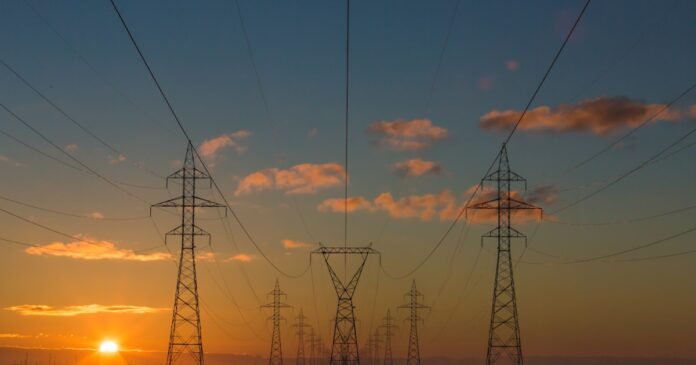
Google just increased its data center power consumption by 44% in two years. That’s not a trend. That’s a crisis they’re solving in real-time.
And they’re not calling the power company. They’re building their own power plants.
The New Race for Power
For decades, tech companies outsourced their infrastructure. You built software, the power grid kept the lights on. Done.
That era is over.
Here’s what’s happening right now:
- Google: Signed a 1.9 gigawatt renewable energy contract with Xcel Energy (Minnesota). That’s enough to power a small country’s worth of AI compute.
- Meta: Bought 80 megawatts of solar directly. They’re not buying energy; they’re buying solar farms.
- Microsoft: Announced plans for dedicated nuclear power for data centers.
- Apple: Building battery storage systems across data center regions.
These aren’t sustainability announcements. These are survival moves.
Why the Grid Can’t Keep Up
AI training and inference use insane amounts of electricity. A single training run for a large model can consume as much power as a city. ChatGPT generates one response for one user, it costs $0.03 in electricity.
Multiply that by millions of users, billions of inference calls per day, and suddenly your data center needs more power than a nuclear plant.
The power grid has a problem: it was built for stability, not growth. Adding new power capacity takes 5-10 years. Building renewable plants takes even longer.
AI companies need that power now.
So they’re bypassing the grid entirely.
The Real Cost: Who Pays?
Here’s what most people don’t realize: when companies lock in long-term power contracts, they pay a premium. The price of energy for AI infrastructure is going up, not down.
That costs gets passed to you as:
- Higher cloud computing prices (AWS, Google Cloud, Azure)
- More expensive AI APIs (ChatGPT, Claude, etc.)
- Regional pricing discrimination (cheap inference in energy-rich regions, expensive elsewhere)
If you’re building an AI startup, your unit economics just changed. Energy, not GPU scarcity, is now your bottleneck.
The Geopolitical Angle
Here’s the thing nobody wants to say: the US is losing the energy dominance game.
China controls 33% of global power generation. The US controls 12%. By 2027, China will have built more renewable capacity than the entire US has today.
India is moving fast: Adani Group just announced $100 billion in investments in green data centers. Their advantage? Cheap land, renewable energy, and growing compute demand from Asia.
If you’re a US company and you need 100 gigawatts of power in 2027, where do you build? Texas has some. Minnesota has some. Nevada has some. China and India have abundance.
That’s not a technical problem. That’s a geopolitical one.
What This Means for Investors
If power is the constraint, then power is the profit center:
- Energy stocks: Traditional oil/gas (XLE, CVX) are seeing tailwinds they haven’t seen in years. Even with climate policy, AI demand is forcing energy expansion.
- Renewable infrastructure: Solar, wind, battery storage companies are getting billion-dollar contracts. This isn’t green virtue signaling; it’s capex.
- Cooling companies: More compute density = more heat. Cooling becomes a 5-10% operating cost adder.
- Grid-adjacent tech: Power distribution, transmission lines, substations — boring infrastructure companies are getting interesting.
The boring energy trade might be the highest-conviction trade of 2026.
The Uncomfortable Question
If AI requires this much power, and the grid can’t provide it, what happens when:
- Climate disasters knock out regional power?
- Geopolitical tensions restrict energy trade?
- AI adoption accelerates faster than current projections?
Then we hit a hard ceiling. AI scaling stops. Compute gets rationed. Prices spike.
That’s not coming in 2030. That’s coming in 2026-2027, based on current capex commitments from hyperscalers.
Sources
- Google energy increase: Google Q4 2025 Earnings Report
- Xcel Energy 1.9GW contract: Xcel Energy Press Release
- Adani data center capex: Adani Enterprises Announcements
- Oracle $50B capex raise: Oracle Investor Relations
- China renewable capacity: IEA Global Electricity Report
- ChatGPT energy costs: OpenAI Technical Reports
- Microsoft nuclear data centers: Microsoft Blog
Related Reading on TSN Media
Follow @tsnmediahub on X for breaking AI news as it happens.
Follow on X