
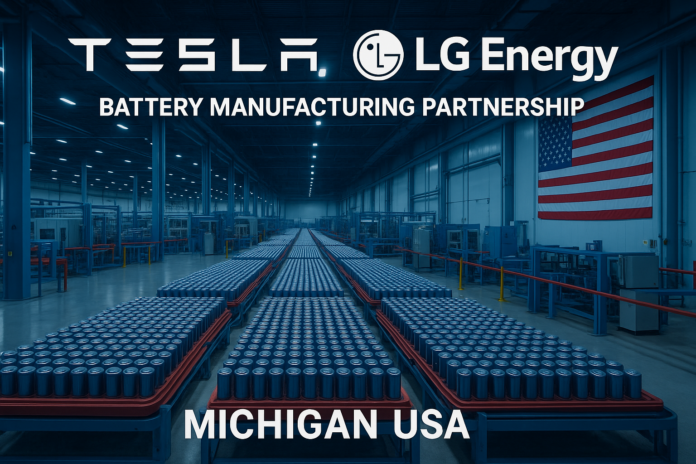
Tesla’s $4.3 Billion Battery Bet: Why Elon Musk Is Buying American
Tesla quietly signed a $4.3 billion deal with LG Energy Solution last July. The news just broke. Here’s why this matters for Tesla’s energy business, US manufacturing, and the global battery supply chain.
The Deal
$4.3 billion.
That’s how much Tesla is paying LG Energy Solution for battery cells over the next several years.
The contract, signed in July 2025 but only confirmed in March 2026, guarantees Tesla a steady supply of LFP (lithium iron phosphate) prismatic cells from LG’s Michigan plant.
Production starts in 2027. The first customer: Tesla’s Megapack factory in Houston.
This isn’t a small side agreement. This is one of the largest battery supply contracts in US history. And it signals a major shift in how Tesla sources the most critical component of its energy storage business.
Why Now?
The China Problem
For years, Tesla relied heavily on Chinese battery manufacturers—primarily CATL, the world’s largest battery maker. This made sense. CATL had scale, technology, and cost advantages no one could match.
But relying on China became risky:
Tariffs: The US imposed tariffs on Chinese batteries, making them more expensive.
Trade tensions: US-China relations deteriorated. Supply chains became political footballs.
Export controls: China restricted exports of critical battery materials and technology.
Geopolitical risk: What happens if tensions escalate? Tesla’s battery supply could be cut off overnight.
Elon Musk saw the writing on the wall. Depending on China for batteries was no longer a viable long-term strategy.
Why LG Energy?
The Michigan Advantage
LG Energy Solution isn’t American. It’s South Korean. But it’s building a massive battery plant in Michigan. And that makes all the difference.
US manufacturing:
- Cells produced in Michigan qualify for US content requirements
- Avoids tariffs on imported batteries
- Eligible for Inflation Reduction Act subsidies
- Shorter supply chain = lower logistics costs
LFP technology:
- Lithium iron phosphate = cheaper, safer, longer-lasting
- Perfect for grid-scale storage (Megapacks)
- Less dependent on nickel and cobalt (supply-constrained materials)
- Tesla’s preferred chemistry for stationary storage
Scale and reliability:
- LG Energy is one of the world’s top battery makers
- Proven manufacturing capability
- Financial stability to invest in US expansion
What This Means for Tesla
Megapack Security
Tesla’s energy storage business is exploding. Megapack deployments grew 113% in 2025. The Houston factory is running at capacity. And demand keeps accelerating.
But you can’t build Megapacks without batteries. And battery supply has been the bottleneck.
The LG deal solves this:
- Guaranteed supply: $4.3B contract = priority access
- Cost stability: Long-term pricing protects margins
- Quality control: Direct relationship with manufacturer
- Scale: Enough cells for hundreds of thousands of Megapacks
Competitive Moat
While competitors scramble for battery supply, Tesla just locked in a massive long-term contract.
The race: Every energy storage company needs batteries. Supply is constrained. Demand is exploding. Whoever secures supply wins.
Tesla’s advantage:
- $4.3B commitment shows serious scale
- LG prioritizes Tesla over smaller customers
- Competitors pay spot prices or get waitlisted
- Tesla can underbid on projects with secure supply
Tariff Protection
The Inflation Reduction Act and subsequent trade policies favor US-made batteries:
- 30% tax credit for US battery production
- Domestic content bonuses for energy projects
- Tariff exclusions for US-manufactured cells
- Buy American preferences for federal projects
Tesla’s Michigan-made cells qualify for all of this. Chinese cells qualify for none.
The math is simple: US batteries are now cheaper than Chinese batteries when you factor in tariffs, subsidies, and logistics.
What This Means for the Battery Industry
US Manufacturing Renaissance
The Tesla-LG deal validates US battery manufacturing. If Tesla—one of the most demanding customers in the world—commits $4.3B to US-made cells, others will follow.
Expected impact:
- More battery plants in Michigan, Ohio, Tennessee
- South Korean and Japanese manufacturers expanding US operations
- Chinese companies considering US factories (despite tensions)
- Supply chain localization (materials, components, recycling)
LFP Dominance
Lithium iron phosphate is winning the grid storage market:
- Cheaper than nickel-based batteries
- Safer (less fire risk)
- Longer lasting (more charge cycles)
- Less material constrained (no nickel or cobalt)
The Tesla-LG deal accelerates this trend. LFP becomes the default for stationary storage. Nickel-based batteries get pushed to premium EV applications.
Supply Chain Restructuring
Global battery supply chains are reorganizing around geopolitical lines:
US sphere: US, South Korea, Japan, Australia (mining)
China sphere: China, Indonesia (nickel), DRC (cobalt)
Europe sphere: EU, Scandinavia, Morocco
The Tesla-LG deal reinforces the US sphere. More deals like this will follow.
The Timeline
2025: Deal Signed (Quietly)
Tesla and LG Energy negotiate and sign the contract. Both keep it quiet—no press release, no SEC filing. Just business as usual.
March 2026: Confirmation
News leaks and is confirmed. Markets digest the implications. Tesla stock reacts positively.
2027: Production Begins
LG’s Michigan plant ramps up. First cells roll off the line. Quality testing begins.
2027-2030: Megapack Deployment
Tesla’s Houston factory receives cells. Megapack production accelerates. Deployments to utilities, solar farms, and grid operators scale rapidly.
Investment Implications
Tesla (TSLA)
Bull case:
- Supply security enables Megapack growth
- Cost stability improves margins
- Competitive advantage in energy storage
- Tariff protection and IRA benefits
Bear case:
- 2027 start date is far (execution risk)
- LG Energy concentration risk
- Technology could shift (solid state batteries)
- $4.3B is a big commitment if demand slows
Price impact: Neutral to positive. Validates energy storage strategy.
LG Energy Solution
Bull case:
- Major customer secured
- US expansion validated
- LFP technology leadership
- Revenue visibility for years
Bear case:
- Tesla concentration (too dependent on one customer)
- Execution risk on Michigan plant
- Price pressure from long-term contract
Investment angle: If public, LG Energy becomes a US battery play.
Battery Supply Chain
Winners:
- US battery manufacturers (SK Innovation, Samsung SDI)
- LFP material suppliers (iron, phosphate, lithium)
- US lithium miners and processors
- Battery recycling companies
Losers:
- China-dependent battery makers
- High-cost European manufacturers
- Nickel and cobalt miners (shifting to LFP)
Energy Storage Sector
The deal validates:
- Grid-scale storage is a massive growth market
- US manufacturing can compete with China
- Long-term contracts are the new norm
- Supply security matters more than lowest price
Implications for competitors:
- Fluence, Powin, Wartsila need supply deals
- Vertical integration (Tesla model) vs. supply contracts
- US content becomes competitive advantage
The Bigger Picture
Energy Independence
The US is building a domestic battery supply chain for the same reason it built a domestic oil industry: energy independence matters.
Batteries are the new oil. Whoever controls battery supply controls the energy transition.
Tesla’s $4.3B bet is a vote of confidence in US manufacturing. It’s also a hedge against a world where China controls critical energy infrastructure.
The Infrastructure Build-Out
This deal is part of a $100+ billion US battery manufacturing boom:
- Tesla: Nevada, Texas, Michigan (via LG)
- Ford/SK: Kentucky, Tennessee
- GM/LG: Ohio, Michigan
- Toyota: North Carolina
- Panasonic: Kansas
The US is becoming a battery superpower. The Tesla-LG deal accelerates that trend.
Elon Musk’s Strategy
Musk doesn’t just want to sell cars and batteries. He wants to own the entire energy stack:
- Generation: Solar (Tesla Energy)
- Storage: Megapacks (this deal enables scaling)
- Distribution: Virtual power plants, grid services
- Consumption: EVs, home batteries
The LG deal secures the storage layer. Without batteries, the rest of the stack doesn’t work.
Key Takeaways
- $4.3B = Supply security — Tesla locks in battery supply for Megapack growth
- US manufacturing wins — Michigan plant beats Chinese imports on cost
- LFP dominance — Lithium iron phosphate becomes standard for grid storage
- Competitive moat — Others scramble for supply while Tesla has guaranteed access
- Geopolitical hedge — Reduces China dependence, aligns with US policy
Related Reading
- Tesla’s Terafab — Vertical integration in semiconductors
- Top 5 AI Crypto Projects — Energy storage for AI data centers
- Morgan Stanley AI Warning — Power demand from AI infrastructure
Sources
- @Tslachan Twitter/X — Original leak
- Official Tesla/LG Energy confirmations — SEC filings and press releases
- LG Energy Solution investor relations — Contract details
- US Department of Energy — Battery manufacturing incentives
- Inflation Reduction Act provisions — Tax credit details
*This analysis was published March 17, 2026, following confirmation of the Tesla-LG Energy deal. Production timeline and specifications subject to change.*

