
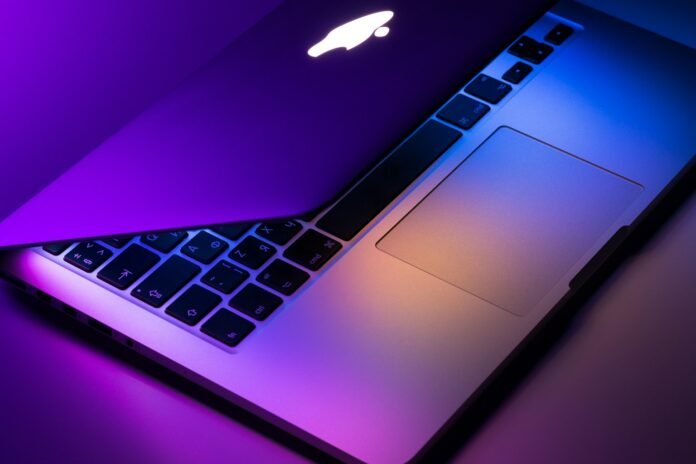
Apple M5 MacBook Air: AI Comes to the Masses
Apple has officially unveiled the M5 MacBook Air, and it’s not just another incremental update. For the first time, Apple is positioning its most popular laptop as a serious AI machine—bringing advanced on-device intelligence to mainstream consumers without the Pro price tag.
Announced on March 3, 2026, the new MacBook Air arrives with a clear message: AI isn’t just for developers and creative professionals anymore. With up to 4x faster AI performance than the M4 model and a staggering 9.5x improvement over the M1, Apple is betting that everyday users want local AI capabilities baked into their daily computing experience.
The M5 Chip: Built for Intelligence
The M5 represents a significant architectural shift. Unlike previous iterations that focused primarily on raw CPU and GPU gains, the M5 introduces Neural Accelerators in each GPU core—a design choice that specifically targets machine learning workloads.
Key specifications include:
- Faster CPU and next-generation GPU with Neural Accelerators per core
- 16-core Neural Engine for dedicated AI processing
- Up to 4TB SSD storage (double the previous base configuration)
- Wi-Fi 7 and Bluetooth 6 via Apple’s new N1 wireless chip
- Up to 18 hours of battery life
The performance claims are substantial. Apple states the M5 Air delivers up to 6.9x faster AI video enhancement in Topaz Video compared to M1, and 6.5x faster 3D rendering with ray-tracing in Blender. For everyday tasks, web browsing is reportedly 50% faster than competing Intel-based PCs.
Why This Matters: AI at the Edge
Apple’s strategy here is clear. While competitors like Microsoft and Google have focused on cloud-based AI services, Apple is doubling down on on-device processing. This approach offers several advantages:
Privacy first: Sensitive data never leaves the machine. Your documents, photos, and conversations stay local.
Always available: No internet connection required for core AI features. Work on a plane, in a coffee shop with spotty Wi-Fi, or anywhere else.
Lower latency: On-device processing eliminates the round-trip to distant servers. Responses feel instantaneous.
The M5 Air runs macOS Tahoe with full Apple Intelligence integration. This means features like real-time transcription, intelligent photo editing, contextual writing assistance, and advanced search capabilities work natively without cloud dependency.
Related: Learn more about Apple’s AI-powered Siri and on-screen awareness and how Apple’s broader AI strategy is evolving.
The Storage Story
One often-overlooked upgrade: base storage now starts at 512GB, double the previous generation. This isn’t just generosity from Apple—local AI models require significant storage space. The company’s own intelligence features, combined with third-party AI applications, can quickly consume hundreds of gigabytes.
The faster SSD technology also matters. AI workloads are often I/O bound, and the improved read/write speeds help feed data to those Neural Accelerators efficiently.
Pricing and Availability
The M5 MacBook Air maintains Apple’s aggressive consumer pricing strategy:
- 13-inch model: Starting at $999
- 15-inch model: Starting at $1,199
Both configurations include 16GB of unified memory as standard—a recognition that modern computing, especially AI workloads, demands more RAM than the 8GB Apple previously offered as entry-level.
Pre-orders began March 4, with general availability starting March 11, 2026. The laptop comes in four colors: sky blue, midnight, starlight, and silver.
The Bigger Picture
Apple’s M5 Air launch signals a broader industry shift. AI is becoming infrastructure, not a feature. Just as smartphones evolved from communication devices to pocket computers, laptops are evolving from productivity tools to intelligent assistants.
Related: See how AI agents are learning to spend money and the payments infrastructure race that’s heating up across the tech industry.
The competitive landscape is heating up. Qualcomm’s Snapdragon X Elite has shown strong AI performance in Windows laptops. Intel’s Lunar Lake chips emphasize AI acceleration. AMD’s Ryzen AI processors are gaining traction. But Apple’s vertical integration—controlling hardware, software, and silicon—gives it unique advantages in optimizing the full stack.
For consumers, the M5 Air represents a democratization of AI compute. You no longer need a $3,000+ MacBook Pro to run sophisticated language models, edit video with AI assistance, or develop machine learning applications. The world’s most popular laptop just became its most accessible AI platform.
Related: Read our coverage of NVIDIA GTC 2026 and the $1 trillion infrastructure bet reshaping the AI landscape.
What to Watch
Several questions remain as the M5 Air hits the market:
- Third-party adoption: Will developers optimize their AI applications for Apple’s Neural Engine, or stick to cross-platform solutions?
- Thermal performance: The Air maintains its fanless design. Can sustained AI workloads maintain performance without throttling?
- Apple Intelligence expansion: What new features will Apple add to its AI suite, and how quickly?
- Enterprise uptake: Businesses have been slower to adopt Apple Silicon. Will the M5’s AI capabilities accelerate corporate transitions?
Conclusion
The M5 MacBook Air isn’t just a faster laptop—it’s a statement of intent. Apple believes the future of computing is intelligent, private, and accessible. By putting serious AI capabilities in its most mainstream product, the company is betting that consumers are ready for a new kind of computing experience.
For anyone considering a laptop purchase in 2026, the M5 Air sets a new baseline. The question is no longer “Do I need AI?” but “Which AI platform works best for me?” And with this release, Apple has made a compelling case that the answer might be sitting in their product lineup.
Sources
- Apple Newsroom – “Apple introduces the new MacBook Air with M5” (March 3, 2026)
- Apple Newsroom – “Apple debuts M5 Pro and M5 Max” (March 3, 2026)
- Apple Newsroom – “Apple introduces MacBook Pro with all-new M5 Pro and M5 Max” (March 3, 2026)
- Apple Newsroom – “MacBook Neo, iPhone 17e, iPad Air with M4, and more are now available” (March 2026)
- Climax Computer – MacBook Air M5 specifications and pricing analysis

