
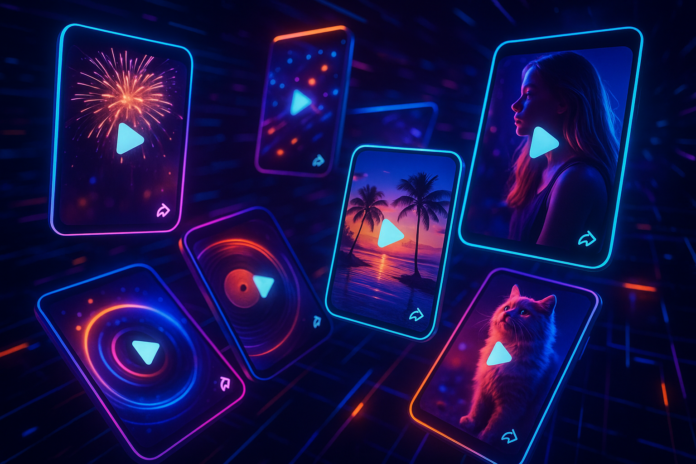
Grok Imagine: While OpenAI Retreats, xAI Bets on the Everyday Creator
OpenAI just shut down Sora. Elon Musk just doubled down.
Less than 24 hours after OpenAI announced it was sunsetting its Sora video generation model, Elon Musk took to X with a simple message: a “big” update is coming to Grok Imagine.
The timing wasn’t subtle. While one AI giant retreats from consumer video generation, another is charging forward. And Musk isn’t just building a Sora replacement. He’s building something different entirely: an “AI Vine.”
This isn’t about Hollywood production. It’s about the 15-second clip you share with friends. The meme you whip up in seconds. The creative spark that doesn’t need a film degree.
While others chase cinematic quality, xAI is betting on creative speed.
The Sora Shutdown: What Happened
OpenAI’s Sora was supposed to be the future of AI video. Announced with fanfare in early 2024, it promised to generate realistic video from text prompts. The demos were stunning. The reality was complicated.
Sora faced several challenges:
- Compute costs — High-quality video generation requires enormous processing power
- Safety concerns — Deepfake potential made OpenAI cautious about wide release
- Use case mismatch — Cinematic quality didn’t translate to everyday utility
- Competition — Runway, Pika, and others offered more accessible alternatives
OpenAI’s decision to shut down Sora signals a strategic pivot. The company is focusing on enterprise and developer tools rather than consumer creativity platforms.
That left a vacuum. Musk is filling it.
Grok Imagine: The “AI Vine” Philosophy
Musk described Grok Imagine as “an AI Vine”—a reference to the beloved short-form video platform Twitter acquired and killed in 2016.
The comparison reveals xAI’s strategy:
Vine was about immediacy. Six seconds. No editing. Pure creative impulse. The constraints were the point—they forced creativity rather than inhibiting it.
Grok Imagine follows the same philosophy. Not feature films. Not polished productions. Quick, shareable, spontaneous visual content generated in seconds.
The February 1.0 release introduced:
- Rapid generation — Videos created in seconds, not minutes
- Loop optimization — Content designed to loop seamlessly
- Social integration — Direct sharing to X/Twitter
- Mobile-first — Designed for phones, not workstations
- Personality-driven — Grok’s “rebellious” tone in visual form
This isn’t competing with Hollywood. It’s competing with TikTok.
The Everyday User Advantage
Most AI video tools suffer from the same problem: they’re built by engineers for engineers.
The interfaces are complex. The outputs require post-processing. The learning curve is steep. The result is powerful but inaccessible.
Grok Imagine takes the opposite approach:
1. Prompt Simplicity
Instead of detailed technical specifications, Grok Imagine uses conversational prompts. “Make me a funny cat video” works. You don’t need to specify camera angles, lighting conditions, or frame rates.
The AI interprets intent, not just instructions.
2. Instant Gratification
Generation happens in real-time. No waiting minutes for rendering. The creative loop—idea, generate, share—takes seconds.
This matters for social media, where timing is everything.
3. Built for Sharing
Grok Imagine outputs are optimized for X’s platform. Aspect ratios, file sizes, and formats work seamlessly with Twitter’s infrastructure.
No export. No conversion. No compatibility issues.
4. Personality Integration
Grok’s distinctive voice—irreverent, current, culturally aware—carries into video generation. The AI understands memes, references, and internet culture.
This creates content that feels native to social platforms, not imported from elsewhere.
The Competitive Landscape
Grok Imagine enters a crowded field with a differentiated approach:
Runway Multi-Shot — Cinematic sequences for filmmakers. Professional focus. Higher quality, higher complexity.
Pika Labs — Accessible video generation with strong community. General purpose, not platform-specific.
Google Veo — Integrated with Google ecosystem. Enterprise and creator focus.
OpenAI Sora — RIP. Cinematic quality proved too expensive and risky for consumer deployment.
Grok Imagine — Social-first, speed-optimized, X-integrated. The TikTok of AI video.
The differentiation is clear. While others chase quality, xAI chases utility.
Why This Strategy Works
Musk’s bet on everyday creators reflects several market realities:
1. Volume Over Quality
Social media runs on volume. Billions of posts daily. Most are mundane. The AI that enables more posts, faster, captures more usage than the AI that enables perfect posts, slowly.
Grok Imagine optimizes for the 99% of content that’s ephemeral, not the 1% that’s cinematic.
2. Platform Lock-In
By integrating deeply with X, Grok Imagine creates switching costs. Your creative history, your prompt library, your audience—all tied to the platform.
This is the TikTok playbook: make the tool so convenient that leaving becomes unthinkable.
3. Data Flywheel
Every video generated trains the model. Every share provides feedback. Every viral hit teaches the AI what works.
X’s massive user base gives Grok Imagine a data advantage that specialized tools can’t match.
4. Cultural Velocity
Internet culture moves fast. Yesterday’s meme is today’s cringe. Grok’s real-time training on X data means it understands what’s current, not what was current last month.
This cultural awareness is hard to replicate and valuable for social content.
The “Big Update” Tease
Musk’s announcement was deliberately vague. But several improvements seem likely:
Longer videos — Current limits are short. Extending duration while maintaining speed would expand use cases.
Audio integration — Sound is essential for social video. AI-generated or synchronized audio would be a major upgrade.
Editing capabilities — Basic trimming, text overlay, and transitions would reduce need for external tools.
Template library — Pre-built formats for common social formats (reactions, explainers, memes).
Collaborative features — Multi-user creation, remixing, and response chains.
Whatever the specifics, the direction is clear: more utility for everyday creators, not more complexity.
The Bigger Picture
Grok Imagine represents a strategic divergence in AI development.
One path—exemplified by OpenAI’s retreat from Sora—prioritizes safety, quality, and control. The assumption: AI is dangerous and must be carefully managed, even if that limits access.
The other path—Musk’s bet with Grok Imagine—prioritizes accessibility, speed, and democratization. The assumption: AI’s benefits outweigh risks, and broad access drives progress.
Both paths have merit. Both have risks. But the divergence is real.
OpenAI is becoming an enterprise infrastructure company. xAI is becoming a consumer creativity platform.
The question isn’t which approach is better. It’s which approach captures the next billion users.
What This Means for Creators
For everyday users, the implications are immediate:
Lower barriers — You don’t need skills, software, or time. Ideas become content instantly.
More experimentation — Low cost of failure means more attempts, more learning, more discovery.
New formats — AI enables content types that didn’t exist before. The next viral format may be AI-native.
Platform dependence — Convenience comes with lock-in. Your creative workflow becomes tied to X.
Quality trade-offs — Speed and accessibility mean sacrificing polish. Not every use case fits.
The Bottom Line
While OpenAI retreats to safety and enterprise, xAI is charging into consumer creativity. Grok Imagine’s “AI Vine” philosophy—fast, social, spontaneous—targets the everyday user that complex tools ignore.
This isn’t about replacing filmmakers. It’s about enabling the rest of us.
The “big update” tease suggests Musk sees the opportunity clearly. With Sora gone and competitors focused on professionals, the consumer AI video space is wide open.
Whether Grok Imagine captures it depends on execution. But the strategy is sound: bet on the billions of everyday creators who want to make something cool, fast, and share it immediately.
The AI video revolution won’t be cinematic. It’ll be social.
Grok Imagine is positioning to lead it.
Related: Read our analysis of Grok taking over X’s algorithm—the infrastructure that will distribute these AI-generated videos.
Sources
- Elon Musk X Post – Grok Imagine Update Tease (March 27, 2026)
- xAI Official Website — Grok Imagine capabilities
- OpenAI Sora — Shutdown announcement
- Wikipedia – Vine — Platform history
- Runway — AI video generation comparison
- Pika Labs — Competitive landscape

