
Tesla’s ‘Put Up or Shut Up’ Year: Optimus Production Begins, Robotaxi Expands, and Competition Heats Up
Elon Musk promised 2026 would be the year Tesla delivers on its AI future. With production timelines locked, factory space expanding, and Wall Street watching, the clock is ticking.
Tesla is making moves. Not the splashy product launches or viral tweets that defined the company’s early years. This is different — quieter, more deliberate, and arguably more consequential. Over the past week, Tesla has signed major industrial leases, pushed critical software updates, and set production timelines that will determine whether the company’s pivot from “electric car maker” to “AI and robotics company” succeeds or collapses under its own ambition.
The stakes couldn’t be higher. After years of promises about autonomous vehicles and humanoid robots, 2026 is the year Tesla must deliver. Wall Street analysts are calling it the “put up or shut up” moment. The infrastructure is being built. The timelines are set. The only question is whether Tesla can execute.
The Fremont Land Grab: Building the Robot Factory
The News: Tesla has quietly signed major R&D leases around its Fremont, California factory, adding significant engineering floor space and heavy-power manufacturing capacity specifically configured for robotics and advanced prototyping.
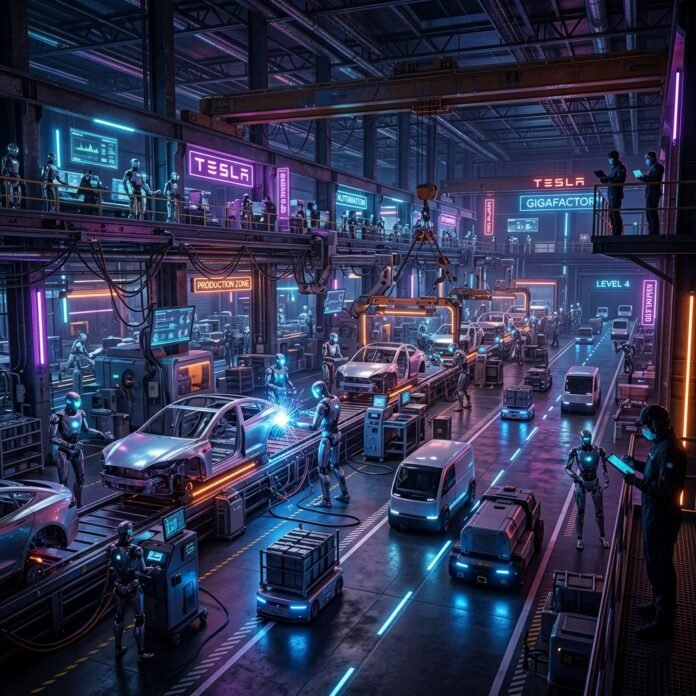
Why This Matters: This isn’t speculative expansion. Tesla is locking in the physical infrastructure needed to manufacture humanoid robots at scale. The Fremont facility — Tesla’s original production plant — is being transformed into ground zero for the Optimus program.
The heavy-power capacity suggests Tesla is preparing for energy-intensive processes of robot actuator manufacturing, precision machining for joints and limbs, and complex assembly of humanoid forms. These leases confirm they’re serious about the summer 2026 production timeline.
This expansion mirrors the infrastructure buildout we tracked in the AI sector earlier this week. Just as Meta is spending $21 billion on CoreWeave compute and Nvidia is investing in RISC-V architecture, Tesla is building physical infrastructure for the robotics era.
Optimus: From Demo to Production
The Timeline:
- Summer 2026: Limited production begins
- 2027: Volume production ramp
- Long-term: Potential external sales to other companies
The Use Case Evolution: Initially, Musk positioned Optimus as a general-purpose humanoid. The current messaging is more pragmatic: factory automation first, broader applications later. Tesla’s own manufacturing operations will be the proving ground.
The Economic Logic: If Tesla can build humanoid robots that work in its factories for less than the cost of human labor, the savings are massive. But the bigger play is external sales. This mirrors the infrastructure control dynamics we analysed — whoever controls the physical automation layer controls the economics of production.
Robotaxi: The App Update That Signals Scale
The News: Tesla pushed a significant update to its Robotaxi app, adding interior camera safety monitoring and pulsing exterior lights. Expansion to 7 new cities planned for H1 2026.
Why This Matters: The safety features suggest Tesla is preparing for regulatory scrutiny as operations scale. Interior cameras address liability concerns. Pulsing lights warn others that the vehicle is autonomous.
The Wall Street View: Morgan Stanley maintains “overweight” rating, citing Robotaxi potential as high-margin business. The market has priced in significant autonomous ride-hailing revenue.
The ‘Put Up or Shut Up’ Moment
BNP Paribas (Bearish): Reiterated “underperform” with $280 price target — 22% downside. Message: 2026 is the year Tesla must deliver on Optimus and Robotaxi.
The Bull Case: Tesla delivers on AI promises. Robotaxi generates high-margin recurring revenue. Optimus becomes dominant robotics platform. Company transitions to software/service margins.
The Bear Case: Timelines slip. Technical challenges prove harder. Competition catches up. Massive AI investments don’t pay off.
Competition Heats Up
Kia Atlas: Deploying Optimus rival at US manufacturing plants. If Kia deploys functional humanoids before Tesla reaches volume production, it undermines Tesla’s “first-mover” narrative.
China’s UniX AI: Unveiled household humanoid capable of cooking and cleaning — going straight for the home while Tesla focuses on factories. The autonomy convergence we tracked is accelerating.
The Affordable EV Question
Reports emerged that Tesla is exploring an affordable EV again, despite Musk scrapping the project in 2024 to focus on robotaxis and robots.
If Tesla revives the affordable EV, it signals uncertainty about the AI timeline. But if they don’t build it, they cede the mass market to competitors like BYD and Volkswagen.
What This All Means
Tesla is at an inflection point. The company that defined the electric vehicle era is betting everything on becoming an AI and robotics company.
The Infrastructure Play: Tesla’s Fremont expansion, like Meta’s CoreWeave deal, is about controlling the physical layer of the next technology era. Infrastructure is the new battleground.
The Timeline Pressure: 2026 is the year Tesla must show meaningful progress. Not demos. Production vehicles, deployed robotaxis, and working factory robots.
The Bigger Picture: Whether Tesla succeeds or fails, the transition they’re attempting is happening. Autonomous vehicles will reshape transportation. Humanoid robots will reshape manufacturing. The question is who delivers them, when, and at what scale.
Related Reading
- The $25 Billion Tech Deal Spree
- Autonomy Convergence
- Energy as Infrastructure Control
- Federal AI Regulation
Sources
- Hoodline — Tesla Robot Land Grab (April 9, 2026)
- TheStreet — Tesla makes move fans waiting for (April 9, 2026)
- Benzinga — Kia Atlas Robot (April 9, 2026)
- HouseBots — China’s UniX AI household robot (April 10, 2026)
- International Business Times — Tesla Robotaxi App (April 10, 2026)
- IndiasNews — Tesla affordable EV (April 10, 2026)
- BNP Paribas Tesla research (April 2026)
- Morgan Stanley Tesla research (April 2026)

