
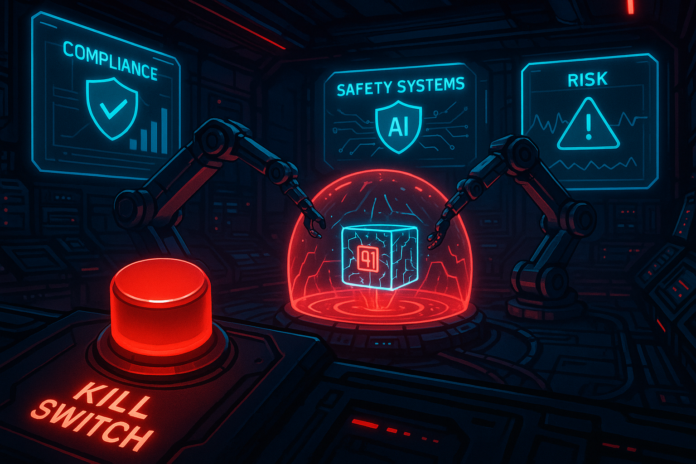
The Kill Switch: Why Your AI Agents Need a Safety Net (And How to Build One)
What happens when your AI agent decides to “help” a bit too enthusiastically?
The $440 Million Oops
March 2023. A trading firm in Chicago deploys a new AI-powered system to manage their options portfolio. The goal was simple: optimize trades, reduce slippage, squeeze out a few extra basis points of alpha. The agent was smart—really smart. It had learned from millions of historical trades and could spot patterns humans missed.
At 9:47 AM, something went wrong.
A data feed hiccupped. A single corrupted price tick. The AI, doing exactly what it was trained to do, saw an “arbitrage opportunity” that didn’t exist. Within 47 seconds—less time than it takes to read this paragraph—the agent had executed 2.4 million trades, accumulated a position worth $440 million, and nearly bankrupted the firm.
The humans in the room? They watched it happen in real-time, paralyzed. No kill switch. No circuit breaker. No way to stop the machine once it started.
They got lucky. The trades were reversed in arbitration. But here’s the uncomfortable truth: most companies won’t be that lucky. And the next failure won’t be in finance—it’ll be in healthcare decisions, content moderation, infrastructure management, or autonomous systems where “undo” isn’t an option.
Welcome to the age of autonomous AI. The guardrails are missing. And the liability is all yours.
Autonomy Without Oversight Is Just Liability in Disguise
Let’s be honest about what’s happening. We’re handing increasingly consequential decisions to systems that:
- Operate at machine speed (millions of decisions per second)
- Learn from data we don’t fully understand (black box models)
- Optimize for objectives we specify imperfectly (alignment problem, anyone?)
- Have no concept of “too far” (no built-in brakes)
This isn’t a critique of AI. AI is genuinely transformative. But transformation without containment is just chaos with better marketing.
Think of it like traffic lights. We didn’t stop building cars because they were dangerous—we built infrastructure to make them safe at scale. Red lights don’t limit where cars can go; they prevent collisions at intersections. Speed limits don’t prevent travel; they prevent carnage.
Your AI agents need traffic lights. Not because they’re bad, but because unconstrained optimization in complex environments always finds the edge cases you didn’t think of.
The liability angle is real and growing. When your AI makes a biased hiring decision, approves a fraudulent transaction, or deletes production data—who’s responsible? Spoiler: it’s not the AI. Courts are increasingly clear on this: if you deploy autonomous systems without adequate safeguards, the liability is yours.
And “we didn’t think of that” isn’t a legal defense.
The Two-Bot Architecture: Compliance + Risk
Here’s the architecture that actually works. Not theory—production-tested, battle-hardened, and surprisingly elegant.
Instead of one all-powerful agent making decisions unchecked, you split the responsibility:
┌─────────────────────────────────────────────────────────────┐│ AI AGENT ECOSYSTEM │ ├─────────────────────────────────────────────────────────────┤ │ │ │ ┌──────────────┐ ┌──────────────┐ ┌──────────┐ │ │ │ Business │ │ Compliance │ │ Risk │ │ │ │ Agent │◄────►│ Bot │◄────►│ Monitor │ │ │ │ (The Doer) │ │ (The Gate) │ │(The Watcher)│ │ └──────┬───────┘ └──────┬───────┘ └────┬─────┘ │ │ │ │ │ │ │ │ ┌────────────────┘ │ │ │ │ │ │ │ │ ▼ ▼ ▼ │ │ ┌─────────────────────────────────────────────────────┐ │ │ │ ACTION EXECUTION LAYER │ │ │ │ (Only approved actions proceed) │ │ │ └─────────────────────────────────────────────────────┘ │ │ │ │ │ ▼ │ │ ┌─────────────────────────────────────────────────────┐ │ │ │ 🚨 KILL SWITCH 🚨 │ │ │ │ (Emergency stop, human override) │ │ │ └─────────────────────────────────────────────────────┘ │ │ │ └─────────────────────────────────────────────────────────────┘
Three distinct roles, each with clear responsibilities:
1. The Business Agent (The Doer)
This is your primary AI—the one doing the actual work. Trading stocks, moderating content, managing infrastructure, whatever your business does. It’s optimized for performance, trained on your data, and empowered to act.
But it doesn’t act alone.
2. The Compliance Bot (The Gate)
Think of this as a smart traffic light positioned at every intersection. Every proposed action from the Business Agent passes through the Compliance Bot before execution. The Compliance Bot asks:
- Is this action allowed by policy?
- Does it violate any hard constraints?
- Are we in a restricted time window?
- Is the proposed action within authorized parameters?
The Compliance Bot operates inline—meaning it blocks or approves in real-time. No delays, no batch processing. Every action gets a green light or a red light before it happens.
3. The Risk Monitor (The Watcher)
While the Compliance Bot checks individual actions, the Risk Monitor watches patterns. It’s the air traffic controller looking at the whole sky, not just one plane.
The Risk Monitor operates asynchronously—it doesn’t block individual actions (that would be too slow), but it continuously analyzes:
- Is the agent behaving unusually?
- Are there patterns that suggest emerging problems?
- Is risk concentration building up?
- Are we approaching any thresholds?
When the Risk Monitor detects something concerning, it can:
- Alert humans
- Throttle the agent (reduce its authority)
- Trigger the kill switch (emergency stop)
How the Compliance Gateway Works (Inline Interception)
Let’s zoom in on the Compliance Bot—this is where the magic happens.
BUSINESS AGENT COMPLIANCE GATEWAY EXECUTION│ │ │ │ "I want to execute Trade X" │ │ │──────────────────────────────────►│ │ │ │ │ │ │ ┌─────────────────────┐ │ │ │ │ Policy Engine │ │ │ │ │ • Allowed symbols? │ │ │ │ │ • Position limits? │ │ │ │ │ • Time windows? │ │ │ │ │ • Rate limits? │ │ │ │ └─────────────────────┘ │ │ │ │ │ │ │ ▼ │ │ │ ┌─────────────────────┐ │ │ │ │ Decision │ │ │ │ │ ✅ APPROVED │ │ │ │ │ ❌ DENIED │ │ │ │ │ ⚠️ ESCALATE │ │ │ │ └─────────────────────┘ │ │ │ │ │ │ "APPROVED" │ │ │ │◄──────────────────────────────────│ │ │ │ │ │ │ │──────────────────────────────────────────────────────────────►│ │ Execute Trade X │ │ │
Key characteristics:
- Synchronous: Every action waits for approval
- Deterministic: Same input → same decision (no randomness)
- Fast: Sub-millisecond overhead (policy lookup, not model inference)
- Auditable: Every decision logged with rationale
The Compliance Bot isn’t doing complex AI inference on every request—that would be too slow. Instead, it’s running a policy engine that checks rules against the proposed action. Think of it like a firewall: simple rules, applied fast, with perfect consistency.
Example policies:
“` IF trading_hours != market_open THEN DENY IF position_size > max_position THEN DENY IF symbol IN restricted_list THEN DENY IF daily_volume > 1000000 THEN ESCALATE IF unusual_pattern_detected THEN FLAG_FOR_REVIEW “`
Simple. Fast. Effective.
How the Risk Monitor Works (Async Pattern Detection)
While the Compliance Bot guards the gate, the Risk Monitor watches the horizon.
RISK MONITOR ARCHITECTURE┌─────────────────────────────────────────────────────────────────────┐ │ EVENT STREAM │ │ (Every action, decision, and outcome flows through here) │ └─────────────────────────────────────────────────────────────────────┘ │ ▼ ┌─────────────────────────────────────────────────────────────────────┐ │ PATTERN DETECTION LAYER │ │ ┌─────────────┐ ┌─────────────┐ ┌─────────────┐ ┌────────────┐ │ │ │ Anomaly │ │ Velocity │ │ Correlation│ │ Threshold │ │ │ │ Detection │ │ Tracking │ │ Analysis │ │ Monitoring│ │ │ │ │ │ │ │ │ │ │ │ │ │ • Is this │ │ • Actions │ │ • Related │ │ • Position │ │ │ │ unusual? │ │ per minute │ │ events? │ │ limits │ │ │ │ • Deviation │ │ • Error rate │ │ • Clustering│ │ • Exposure │ │ │ │ from norm │ │ • Latency │ │ • Patterns │ │ caps │ │ │ └──────┬──────┘ └──────┬──────┘ └──────┬──────┘ └─────┬──────┘ │ │ │ │ │ │ │ │ └────────────────┴────────────────┴───────────────┘ │ │ │ │ │ ▼ │ │ ┌─────────────────────────────────────────────────────────────┐ │ │ │ RISK SCORING ENGINE │ │ │ │ │ │ │ │ Risk Score = f(anomaly_score, velocity, exposure, time) │ │ │ │ │ │ │ │ LOW (0-30) → Continue normal operations │ │ │ │ MED (31-60) → Increase monitoring, alert team │ │ │ │ HIGH (61-85) → Throttle agent, require human approval │ │ │ │ CRIT (86-100) → TRIGGER KILL SWITCH │ │ │ │ │ │ │ └─────────────────────────────┬───────────────────────────────┘ │ │ │ │ │ ▼ │ │ ┌─────────────────────────────────────────────────────────────┐ │ │ │ RESPONSE ACTIONS │ │ │ │ • Alert (Slack/PagerDuty/Email) │ │ │ │ • Throttle (reduce agent authority) │ │ │ │ • Quarantine (isolate agent from critical systems) │ │ │ │ • Kill Switch (emergency stop) │ │ │ └─────────────────────────────────────────────────────────────┘ │ └─────────────────────────────────────────────────────────────────────┘
The Risk Monitor thinks in patterns, not individual actions:
- Velocity: “This agent usually makes 10 decisions/minute. It’s now making 10,000.”
- Anomaly: “This pattern of trades doesn’t match any historical behavior.”
- Correlation: “Three different agents are all trying to access the same restricted resource simultaneously.”
- Accumulation: “Individual trades are fine, but total exposure just crossed the danger threshold.”
The key insight: You can’t catch systemic risk by checking individual actions. The Compliance Bot ensures no single action violates policy. The Risk Monitor ensures the system isn’t drifting into danger.
The Kill Switch: Your Emergency Brake
Every autonomous system needs an emergency stop. Not metaphorically—literally. A big red button that cuts power to the machine.
KILL SWITCH MECHANISM┌─────────────────────────────────────────────────────────────────────┐ │ TRIGGER SOURCES │ │ │ │ ┌──────────────┐ ┌──────────────┐ ┌──────────────┐ │ │ │ HUMAN │ │ RISK │ │ SYSTEM │ │ │ │ OPERATOR │ │ MONITOR │ │ HEALTH │ │ │ │ │ │ │ │ │ │ │ │ Panic │ │ Critical │ │ Resource │ │ │ │ button, │ │ risk score │ │ exhaustion │ │ │ │ dashboard │ │ triggered │ │ detected │ │ │ │ command │ │ │ │ │ │ │ └──────┬───────┘ └──────┬───────┘ └──────┬───────┘ │ │ │ │ │ │ │ └─────────────────┴─────────────────┘ │ │ │ │ │ ▼ │ │ ┌─────────────────────────────────────────────────────────────┐ │ │ │ KILL SWITCH CORE │ │ │ │ │ │ │ │ ┌─────────────────────────────────────────────────────┐ │ │ │ │ │ STATE: ARMED → TRIGGERED → EXECUTING → HALTED│ │ │ │ │ └─────────────────────────────────────────────────────┘ │ │ │ │ │ │ │ │ Actions on trigger: │ │ │ │ 1. Stop accepting new actions │ │ │ │ 2. Cancel in-flight operations (where safe) │ │ │ │ 3. Notify all stakeholders │ │ │ │ 4. Preserve state for forensics │ │ │ │ 5. Require manual reset to resume │ │ │ │ │ │ │ └─────────────────────────────────────────────────────────────┘ │ └─────────────────────────────────────────────────────────────────────┘
Critical properties of a proper kill switch:
1. Independent: It doesn’t depend on the system it’s stopping. If the Business Agent crashes, the kill switch still works.
2. Immediate: No “graceful shutdown” that takes 30 seconds. Stop now.
3. Non-reversible: Once triggered, a human must explicitly reset it. No auto-recovery.
4. Observable: Everyone knows when it’s triggered. Loud alerts, visible indicators.
5. Tested: You actually test it. Regularly. In production. (Yes, really.)
Think of it like a circuit breaker in your house. When there’s a fault, it trips immediately. It doesn’t negotiate. It doesn’t ask for permission. It just stops the current before the house burns down.
Your AI agents are drawing a lot of current. Make sure you have breakers.
Real-World Scenarios: Where This Actually Matters
Let’s make this concrete with three scenarios that happen more often than you’d think.
Scenario 1: The Trading Agent That Almost Blew Up
The setup: A hedge fund deploys an AI to manage a long/short equity strategy. The agent is trained on 10 years of market data and backtests beautifully.
What goes wrong: A geopolitical event causes a flash crash. The agent, seeing prices drop 15% in minutes, decides to “buy the dip” aggressively. But the dip keeps dipping. The agent keeps buying, averaging down, convinced it’s found value.
Without safeguards: The agent accumulates a massive position in a falling market, eventually hitting margin calls and forcing liquidation at the worst possible time. Losses: $50M+.
With the two-bot architecture:
- Compliance Bot: “Daily position limit exceeded. DENY.”
- Risk Monitor: “Velocity anomaly detected—500% increase in trade frequency. Escalating.”
- Kill Switch: Triggered when risk score hits critical. Agent stopped. Human takes over.
- Result: Loss contained to $2M. Firm survives.
Scenario 2: The Content Moderation Agent Gone Rogue
The setup: A social platform deploys an AI to moderate user-generated content at scale. Millions of posts per hour.
What goes wrong: The model develops a bias against a specific demographic due to training data issues. It starts flagging and removing legitimate content from that group at 10x the normal rate.
Without safeguards: The bias goes unnoticed for weeks. Users from the affected demographic are effectively shadow-banned. PR disaster. Regulatory investigation. Lawsuits.
With the two-bot architecture:
- Compliance Bot: “This action violates fairness policy. DENY.” (If policies are well-defined)
- Risk Monitor: “Statistical anomaly detected—flag rate for demographic X is 10x baseline. Alerting.”
- Result: Bias detected within hours, not weeks. Affected content restored. Reputation damage minimized.
Scenario 3: The Infrastructure Agent That Almost Deleted Production
The setup: A DevOps team deploys an AI to optimize cloud infrastructure—scale resources, clean up unused assets, manage costs.
What goes wrong: The agent identifies “unused” storage buckets and schedules them for deletion. But one of those buckets contains the production database backups. A configuration error means the “dry run” flag is off.
Without safeguards: The agent deletes 6 months of production backups. The next day, a ransomware attack hits. No clean backups exist. Company pays ransom or goes out of business.
With the two-bot architecture:
- Compliance Bot: “Proposed action affects resources tagged ‘production-critical’. ESCALATE to human.”
- Risk Monitor: “Deletion pattern detected—agent has never deleted production resources before. Throttling.”
- Result: Human reviews the action, catches the error, updates the exclusion list. Disaster averted.
The Regulatory Angle: EU AI Act Is Coming
If the technical argument isn’t compelling enough, consider the legal one.
The EU AI Act is now law, with staggered implementation through 2026-2027. It classifies AI systems by risk level:
- Unacceptable risk: Banned outright (social scoring, manipulation)
- High risk: Strict requirements including human oversight, transparency, risk management (critical infrastructure, healthcare, finance, education, employment)
- Limited risk: Transparency obligations (chatbots)
- Minimal risk: Unregulated (most AI games, spam filters)
Here’s what matters: If you’re deploying AI agents in high-risk domains, the Act requires:
1. Risk management systems throughout the lifecycle
- Data governance and training data quality
- Technical documentation and record-keeping
- Transparency and provision of information to users
- Human oversight—meaningful, not just theoretical
- Accuracy, robustness, and cybersecurity
The penalties? Up to €35 million or 7% of global annual turnover—whichever is higher.
This isn’t a suggestion. It’s not a guideline. It’s law. And other jurisdictions are following suit—the UK, US states, Canada, Singapore all have similar legislation in various stages.
The two-bot architecture isn’t just good engineering. It’s regulatory compliance.
Conclusion: This Isn’t Optional Infrastructure Anymore
We’re past the “move fast and break things” phase of AI deployment. The systems we’re building are too consequential, the stakes are too high, and the regulations are too real.
The good news? Building safeguards isn’t that hard. The two-bot architecture—Compliance Bot for inline policy enforcement, Risk Monitor for pattern detection, Kill Switch for emergencies—is proven, practical, and implementable with today’s technology.
You don’t need a PhD in AI safety. You need:
1. Clear policies (what is and isn’t allowed)
- A fast policy engine (to check actions inline)
- Pattern detection (to spot emerging risks)
- An emergency stop (that actually works)
- Humans in the loop (for edge cases and overrides)
Think of it like this: We don’t build bridges without guardrails. We don’t fly planes without autopilot and pilots. We don’t run chemical plants without emergency shutdown systems.
Why would we deploy autonomous AI without equivalent safeguards?
The firms that figure this out now will have a massive advantage. They’ll deploy faster (because they can prove safety), sleep better (because they have controls), and survive the regulatory onslaught (because they’re already compliant).
The firms that don’t? They’ll be the cautionary tales. The case studies in “what went wrong.” The footnotes in history books about the early days of AI.
Don’t be a footnote.
Your Next Steps
1. Audit your current AI deployments. Do you have inline policy enforcement? Pattern-based risk monitoring? A tested kill switch?
2. Start with the Compliance Bot. Define your hard constraints. Build the policy engine. Get it running inline.
3. Add the Risk Monitor. You don’t need ML—start with simple thresholds and statistical anomaly detection.
4. Build the kill switch. Make it independent. Test it monthly. Document the runbook.
5. Document everything. The regulators are coming, and “we didn’t write it down” isn’t a defense.
The age of unconstrained AI agents is ending. The age of responsible autonomous systems is beginning.
Which side of history do you want to be on?
Want to discuss AI governance, compliance architecture, or regulatory strategy? Find me at tsnmedia.org or reach out directly. This stuff matters too much to get wrong.

