Canada EuroHPC membership is now official: the country has joined Europe’s public supercomputing network. At the Canada–EU summit in Montréal on 30 October, it became the 39th participating state of the European High Performance Computing Joint Undertaking, the EU body that buys and runs machines such as JUPITER. The EuroHPC Joint Undertaking said that Canada “officially became” a member that day.
The move matters because computing power has become a bottleneck for AI research, and few countries can afford a top-tier machine alone. Membership gives Canadian researchers, universities and businesses a route into a pooled system that already spans a dozen supercomputers across Europe. It also signals how far Ottawa is now leaning towards Europe on technology, one day after it took a stake of up to C$1.6bn in Cohere.
In brief
- Canada joined the EuroHPC Joint Undertaking on 30 October as its 39th participating state, as part of a wider Canada–EU “Alliance for the Future”.
- Canadian researchers and firms will be able to use European supercomputing, AI and quantum resources, including JUPITER, and work on joint projects.
- No financial contribution, access quota or start date for Canadian users has been published.
What Canada EuroHPC membership actually gives researchers
EuroHPC is a funding body created under EU law that pools European and national money to buy supercomputers and fund research into the chips, software and skills behind them. According to its release, it has procured 12 supercomputers, oversees 19 AI Factories with 13 smaller “AI Factory Antennas” for start-ups and SMEs, and is building a European quantum computing network. A regulation adopted this year, Council Regulation (EU) 2026/150, added AI Gigafactories and quantum technologies to its remit.
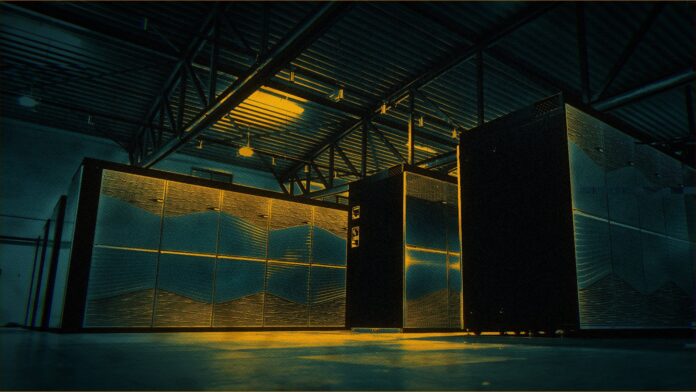
The Canadian government’s backgrounder names JUPITER, “one of the world’s most powerful supercomputers”, as an example of what the joint undertaking builds. JUPITER, at the Jülich Supercomputing Centre in Germany, is described by NVIDIA as Europe’s first exascale supercomputer; the company recently used it to simulate a 104-qubit quantum processor. The European Commission said that Canada, like other participating states, “will be able to access European HPC, AI and quantum computing resources”, and that Canadian scientists can collaborate on European projects in all three fields.
Evan Solomon, Canada’s Minister of Artificial Intelligence and Digital Innovation, said in the EuroHPC release that joining “will deepen Canada’s partnership with Europe and open new opportunities for Canadian researchers and innovators”. At the announcement he was blunter, BetaKit reported: “It means access to a compute power no one can build alone.”
Supercomputing is one part of a wider Canada–EU package
The membership was one of a long list of measures in the “Alliance for the Future” launched at the summit. The Council of the EU’s summit page says leaders welcomed Canada’s EuroHPC participation alongside plans for closer work on AI security, data flows and AI factories.
On the digital side, the backgrounder says the two sides concluded negotiations on a Canada–EU Digital Trade Agreement, and will work towards Canada taking part in the EU’s next research framework programme for 2028 to 2034. Canada has been associated with the current Horizon Europe programme since 2024, according to EuroHPC. Canada also plans a market study on routes for communications cables to Europe, with the EU to assess a joint cable, and will explore cooperation on IRIS², the EU’s planned secure satellite network. A treaty framework will let the European Investment Bank finance critical-minerals projects in Canada.
Canada is also building its own public AI supercomputer under an C$890m programme. BetaKit reported that Solomon said the organisation chosen to lead it would be named “early in the new year”, and that he was open to the machine joining the European network once built.
Membership is settled, but the terms of access are not
The announcements are clear on status and vague on substance. Both EuroHPC and the Commission say Canada is now a participating state, so this is more than a statement of intent. Yet neither side has published what Canada pays, how much machine time Canadian users can expect, whether they will apply through EuroHPC’s existing access calls or dedicated ones, or when the first Canadian projects can start. Those details will decide whether membership changes anything for a university lab in Toronto or Vancouver.
The direction of travel is easier to read. Ottawa is building compute at home through its own supercomputer programme and its Cohere stake, while buying into Europe’s shared infrastructure for capacity it cannot match alone. For Europe, Canada’s entry extends a network built around European needs to a partner across the Atlantic. EuroHPC money already reaches national machines inside Europe: Greece’s Daedalus supercomputer was part-funded by it, Euronews reported, and Canada’s own planned machine could one day sit alongside such systems.
There is a tension, too. EuroHPC’s stated mission is European “strategic autonomy” in computing, and its resources are already in demand from member-state researchers. A non-European member adds money and partners, but also competition for scarce machine time. How that time is shared between members will show how much “access” means in practice.
The next marker is Canada’s own: the choice of who leads its C$890m public AI supercomputer, which Solomon expects early in the new year.
Sources
- Prime Minister of Canada: Canada and the European Union announce new Alliance for the Future (backgrounder, 30 Oct 2026)
- EuroHPC Joint Undertaking: Canada Becomes the 39th Participating State (30 Oct 2026)
- European Commission: EU and Canada team up in supercomputing and quantum (30 Oct 2026)
- Council of the EU: EU-Canada summit, 29-30 October 2026
- Prime Minister of Canada: Joint Statement on the Alliance for the Future (30 Oct 2026)
- BetaKit: Canada to join European supercomputer program (30 Oct 2026)
Related stories
- Canada to Take Up to C$1.6bn Stake in Cohere as It Raises Series E
- NVIDIA Simulates 104 Qubits on JUPITER to Test a Quantum Error Fix
- Greece Inaugurates Daedalus, an 85.69-Petaflop Supercomputer
Image: Forschungszentrum Jülich / Wikimedia Commons, CC BY-SA 4.0, modified by TSN; this image is also CC BY-SA 4.0
Follow @tsnmediahub on X for breaking AI news as it happens.
Follow on X