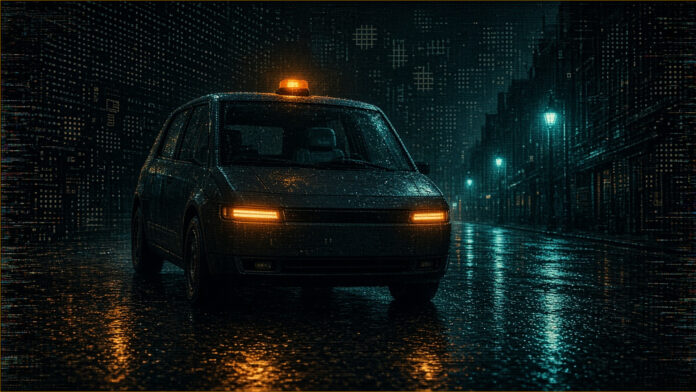
Passengers in Guangzhou can now hail a collaboratively developed bZ4X Robotaxi “24 hours a day through the PonyPilot app or Pony.ai’s mini-programs on partner platforms, including WeChat and Alipay.” In a 16 November blog post, Pony AI Inc. and Toyota said they have “announced the launch of fully driverless commercial services” with that vehicle, and that it “has officially joined the company’s fully driverless commercial fleet in Guangzhou.”
Pony.ai also posted the news on X at 04:31 GMT, writing that the companies “has launched fully driverless commercial services with collaboratively developed bZ4X robotaxi, as the companies work toward deploying around 1,000 bZ4X robotaxis across major Chinese cities.” The wording is the company’s. There is no separate Toyota webpage for the launch; Toyota’s statement sits inside that joint release. The blog is dated Guangzhou, 16 November 2026, and is issued in the name of Pony AI Inc., which the post identifies by its Nasdaq and Hong Kong listings, together with Toyota.
The bZ4X Robotaxi is one Gen-7 model in a longer partnership
The blog describes the bZ4X Robotaxi as one of Pony.ai’s three seventh-generation, or Gen-7, robotaxi models, “collaboratively developed” with Toyota and “developed from the ground up for Level 4 autonomous driving.” Those capability claims are Pony.ai’s and Toyota’s. The companies said they have worked on robotaxis together since 2019, and have already brought services to Beijing, Shanghai, Guangzhou and Shenzhen. In 2023, Pony.ai, Toyota Motor China and GAC Toyota “decided to establish a joint venture with an investment of more than RMB 1 billion.” That figure is the 2023 venture, not a new sum announced this week.
The first mass-produced vehicle “rolled off the line in February 2026.” With production ramping up, the companies said they are “progressing toward their planned deployment of around 1,000 bZ4X Robotaxis across major cities in China.” They are also “testing the model and preparing for deployment in other major Chinese cities.” No timetable was given for those other cities, and no current fleet size was stated beyond the Guangzhou launch.
Dr. Luyi Mo, vice president of Pony.ai, said: “Bringing the bZ4X Robotaxi into commercial service demonstrates what can be achieved by combining Pony.ai’s proven Level 4 autonomous driving technology with Toyota’s world-class vehicle engineering and manufacturing expertise.” The post also lists in-car features, including Bluetooth unlocking, a voice assistant, entertainment and climate controls, and says the companies will handle maintenance, charging and routine servicing together.
The blog also says Pony.ai “worked closely with Toyota on critical vehicle engineering requirements, including redundancy and fail-operational capabilities, to support safe and reliable fully driverless operations.” Those safety-engineering claims are the companies’. The same post says the collaboration now extends beyond development and production to fleet operations, including vehicle maintenance, charging and routine servicing, drawing on Toyota’s service network as well as Pony.ai’s experience of running autonomous fleets. None of that, however, is accompanied by a public figure for how many Gen-7 bZ4X vehicles are actually in the Guangzhou fleet today.
This is a commercial service in China, not a UK launch. TSN has already recorded Pony.ai’s planned robotaxi testing in London with Uber and a separate testing start in Manchester with Uber and Verne. Those remain testing plans. They are not this Guangzhou service.
A commercial start in Guangzhou is not the 1,000-vehicle plan, and it is not Toyota’s Japan project
The news that matters today is narrow and solid: a named vehicle has entered a fully driverless commercial fleet in one city, and it can be hailed around the clock on Pony.ai’s existing app and mini-programs. That is further along than a memorandum or a test permit. It is also as far as the official post goes.
The “around 1,000” figure is a planned deployment across major Chinese cities, not a count of cars now in service. The February production start is useful context, but it does not tell a reader how many bZ4X robotaxis have been built, licensed or assigned to Guangzhou. Until Pony.ai or Toyota give a current fleet number, the safe reading is a launch plus a target.
It is also a different project from Waymo and Toyota’s plan to test a driverless bZ4X fleet in Japan in 2027. The vehicle family is the same; the operator, the country and the timeline are not. Folding this Guangzhou service into that Japan post would blur two stories. They should stay on their own pages, with a cross-link for readers who want the other Toyota bZ4X thread.
Pony.ai’s wider commercial push includes other partnerships TSN has already noted, including an MOU with inDrive on Kazakhstan robotaxis. Those, too, are separate. The next official facts to watch on this vehicle are whether the companies name the other Chinese cities they say they are preparing, and whether the planned run of around 1,000 bZ4X robotaxis is later stated as a number actually in service.
Sources
- Pony.ai, “Pony.ai and Toyota Launch Fully Driverless Commercial Services with Gen-7 bZ4X Robotaxi,” 16 November 2026
- Pony.ai (@PonyAI_tech) on X, 16 November 2026, 04:31 GMT
Get TSN’s biggest tech stories, explained.
News and insights across AI, tech, crypto and cybersecurity. Every source linked. Unsubscribe anytime.
Get the newsletterRelated stories
- Waymo and Toyota to Test a Driverless bZ4X Fleet in Japan in 2027 is the other live TSN post on a Toyota bZ4X robotaxi programme, and the right next stop for how this Guangzhou service is a separate project.
- Uber, Verne and Pony.ai Begin Testing Robotaxis in Manchester
- Pony.ai and Uber Plan Robotaxi Testing in London: What Is Planned, and What Is Not Known
Follow @tsnmediahub on X for breaking AI news as it happens.
Follow on X