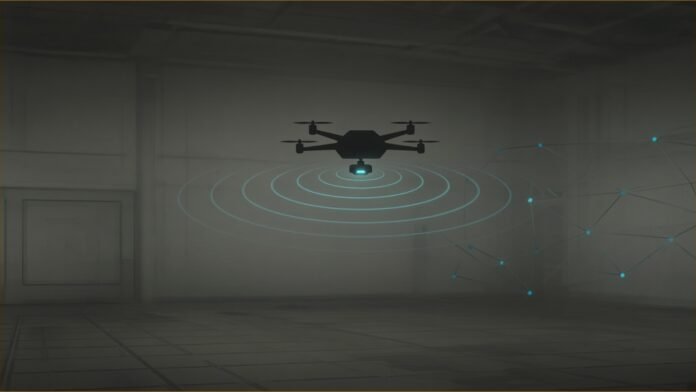
The US Army is testing its Radiofrequency Delivery Effects Platform (RDEP) on small drones as it works out what equipment its tactical cyber units should carry, Col. David Bergmann, the Army’s project manager for cyber warfare, told Breaking Defense. The tests use “a mix of government-developed and commercial-off-the-shelf payloads to deliver ‘non-kinetic effects’ at the tactical edge”, the publication reported on Thursday.
The work is experimental. “This next year we have not made decision on what we’re going to go into production with. We’re still doing prototypes across the various different form factors,” Bergmann said in the interview, given at the Association of the US Army’s annual conference last week.
The Army wants to know which kit its cyber battalions need
According to Bergmann, the Army is exploring how RDEP and other payloads can support “real-time spectrum monitoring and tailored cyber effects” while “minimizing unintended impacts on friendly systems”. The equipment is for the 11th Cyber Battalion and a 12th Cyber Battalion, which Breaking Defense says the Army plans to set up “in the coming months as a replica of the 11th”.
Breaking Defense describes the 11th as a unit that carries out tactical cyber operations alongside ground forces, mainly through radio-frequency, electronic warfare and information operations. Its Expeditionary Cyber Teams have deployed on rotation to support operations at the US southern border over the past year, and Bergmann said those deployments have helped the Army judge what ground-based and man-portable equipment, drones and payloads the teams need.
“How many of these different things does the ECT need? How much of this capability does the 11th need from a cyber perspective, how much EW capability [do] they need?” he said. The Army is weighing dismounted, vehicle-based and drone-mounted payloads, and has also used the Terrestrial Layer System Manpack, which Breaking Defense describes as a backpack system that can sense and jam signals. After an initial prototype went to the teams, Army Cyber Command is now drafting the kits, Bergmann said.
Bergmann did not say what effects the drones deliver. Breaking Defense, not Bergmann, says such effects are typically jamming and gaining access to Wi-Fi systems, and describes RDEP as a system that lets operators “load exploits onto cards and deliver digital bullets”.
The Army describes RDEP as an existing programme
The Army’s own material describes RDEP in more general terms. The Project Manager Cyber Warfare page lists it as “Tactically deployable, RF-enabled hardware and software systems for use by Army Cyber forces supporting both dismounted/wearable and mounted/fixed-site configurations”. It does not mention drones.
In August, Army engineers demonstrated RDEP equipment to 11th Cyber Battalion soldiers at Aberdeen Proving Ground, according to an Army article. The demonstration linked “three program of record capabilities”, including Warped Alloy, software that the Army says “can deauthorize the adversary’s signals at that protocol level” instead of overwhelming them with energy. Maj. Michael Owens of the RDEP product office said it was the first time the three programmes had been shown working together.
Bergmann’s office is itself new. The Army chartered Project Manager Cyber Warfare on 31 July, merging its defensive cyber and cyber-and-space offices. “Offense informs defense and defense informs offense,” Bergmann said then.
What is undecided is the form factor, not the platform
The phrase “no programme of record” needs care. Breaking Defense says the 11th Cyber Battalion does not yet have a programme of record for its standard-issue equipment. RDEP itself already has a product office, and the Army calls it one of three programme-of-record capabilities. The open question is how that capability is packaged and carried: on a soldier’s back, on a vehicle or on a small drone. On the sources available, the drone tests are about how to carry an existing capability, not the start of a new one.
The Army has been asking industry about drone integration since at least March. Its solicitation for an RF Delivered Effects Platform, Portable 2.0, asked for an “optional capability” to integrate with small drones “to extend its range and boost situational awareness”, DefenseScoop reported, and said such offers would count in the evaluation. Neither the Army nor Breaking Defense has said which drones or vendors are involved, what the tests cost, or whether any drone-mounted payload has been used on operations.
At the same AUSA show, Israel Aerospace Industries unveiled its HawkGuard drone interceptor. TSN has also reported on Army Cyber documents describing AI agents built to roam and “neutralise” targets, and on Ukraine’s claim that a heavy drone flew a wounded soldier to safety.
For now, the next step is more feedback. “We have some opportunities in the next year that we’re going to get with [the 11th] to get more feedback on that,” Bergmann said.
Sources
- Breaking Defense (Mark Pomerleau): Army unit experimenting with small drones for ‘tailored cyber effects’, 22 October 2026
- CPE ISW / DEVCOM C5ISR Center: Army combines C5ISR-developed technologies to advance EW counter measure capabilities, 9 October 2026
- CPE ISW: Project Manager Cyber Warfare (PM CW)
- US Army: Constant Modernization: The Establishment of Project Manager Cyber Warfare, 3 August 2026
- DefenseScoop: Army solicits industry for portable platform to deliver RF effects, 3 March 2026
Related stories
- Israel Aerospace Industries Unveils HawkGuard, Which Uses Drones to Hit Hostile Drones
- Ukraine Says a Heavy Drone Flew a Wounded Soldier to Safety, Claiming a First
- Army Cyber Documents Describe AI Agents Built to Roam and ‘Neutralise’ Targets
Follow @tsnmediahub on X for breaking AI news as it happens.
Follow on X