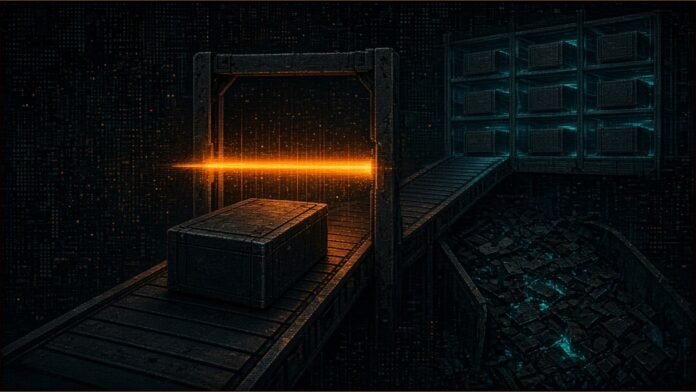
A used electric-car battery used to wait its turn at a test bench that could handle one or two a day. In Pohang, on South Korea’s east coast, a new centre that opened on 26 October is built to test more than 150 a day and decide whether each one goes on to a second life or into recycling.
The centre, in the Blue Valley National Industrial Complex, was built jointly by the Ministry of Climate, Energy and Environment and North Gyeongsang Province, with Pohang City, according to the province’s press release and a Yonhap report. Its design capacity is more than 30,000 batteries a year. No figure for actual throughput has been published yet.
In brief
- The Pohang centre automates testing and grading of used EV batteries, from intake to sorting, at pack and module level.
- It is designed to handle more than 150 batteries a day and 30,000 a year, up from one or two a day before.
- Each battery is graded for reuse, for example in energy storage, or sent for recycling. No cost, staffing or reuse rate was given.
What the centre does
The building sits on an 8,030 square metre site with 3,492 square metres of floor space, the province says. Inside are test rigs that assess whole battery packs and smaller modules at the same time, linked by conveyors and an integrated control system. Everything from intake and loading to the final grade is automated.
The point of the grading is to separate batteries that can be reused from those that need to be recycled. The province says reusable batteries could find wider use in energy storage systems. According to Pohang City, as reported by the Seoul Economic Daily, the centre diagnoses performance and remaining lifespan, and will work with the province’s regional collection centre for end-of-life battery materials, so that batteries can move to the reuse and recycling market faster.
Construction began in April 2025 and finished in April 2026. The equipment has since been installed and commissioned. The ceremony was attended by Shim Eun-su, deputy head of the ministry’s taskforce on critical resources and the circular economy, provincial officials and Mayor Park Yong-sun.
Mintech, a Korean battery-diagnostics company, says it led the build of the automation system for the four-year project, and told the IT daily etnews that the grading combines its own impedance-based fast diagnostics with AI algorithms. The province’s release does not name a contractor or an operator.
A law and a cluster behind it
The opening follows a law on the management of used batteries and the growth of the industry around them, enacted in May, which the province says gives a legal basis for performance testing, safety management and the reuse and recycling trade.
North Gyeongsang has been building a battery chain around Pohang for several years: a comprehensive management centre for secondary batteries, a used-battery resource-circulation cluster and a recycling plant for lithium iron phosphate (LFP) batteries. With the testing centre in place, officials say every stage is now covered, from collection and storage to testing, reuse and recycling.
“The competitiveness of the battery industry now lies not only in making batteries well, but also in reviving the value of batteries that have reached the end of their use,” said Park Si-gyun, the province’s director-general for science and industry (TSN’s translation from the Korean). He said the province would grow used-battery reuse and recycling into “a new growth engine”. Mayor Park called the centre “core infrastructure for the battery circular economy” that gives used batteries new value, according to Yonhap (also TSN’s translation).
Testing is the step that decides a battery’s second life
Reuse depends on knowing what is left in a battery, and that has been the slow part. A pack coming out of a car can look fine and still hide weak cells; quality problems that sit inside individual cells are why VW is recalling ID. electric cars over faulty cells. Testing one or two packs a day by hand cannot keep up once electric cars reach the end of their first life in large numbers. Moving to 150 a day turns grading from a bottleneck into a production line.
That matters because the two outcomes are worth very different things. A battery graded for reuse can go into stationary storage, the kind of system that recently helped batteries beat gas at Australia’s evening peak. One graded for recycling becomes raw material, the market Europe is courting with 19 recycling projects among its 46 new critical raw materials strategic projects. Research is also pushing recovery into battery design from the start, as with a recyclable flow battery chemistry reported on 24 October. Pohang’s centre works on the batteries that already exist.
The figures that would show it works are still missing
Thirty thousand a year is what the plant is built for, not what it has done. The announcements give no cost, no staffing numbers and no word on who runs the centre or what it charges. Nor do they say what share of the batteries tested so far were graded for reuse rather than recycling, which is the number that decides whether the second-life market is real. Supply may also be the limit rather than the machines: the centre can only test what the collection network brings in.
The first useful report from Pohang would be a year’s tally: how many batteries came through, and how many left for a second life rather than the shredder.
Sources
- North Gyeongsang Province: Gyeongbuk builds system to test 150 used EV batteries a day automatically (press release, Korean), 26 October 2026
- Yonhap: Electric-car battery performance to be judged automatically: evaluation centre opens in Pohang (Korean), 26 October 2026
- Seoul Economic Daily: Pohang opens automated testing center for used EV batteries, 26 October 2026
- etnews: Mintech builds automated evaluation centre for used EV batteries (Korean), 26 October 2026
Related stories
- Recyclable Flow Battery Kept 98.1% of Capacity Over 2,200 Lab Cycles
- Batteries Beat Gas at Australia’s Evening Peak, AEMO Says
- VW Prepares a Wider Recall of ID. Electric Cars Over Faulty Battery Cells
- European Commission Selects 46 New Critical Raw Materials Strategic Projects. The Label Is Not Funding
Follow @tsnmediahub on X for breaking AI news as it happens.
Follow on X