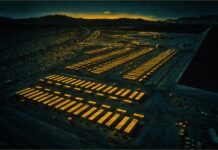
Google is paying US$160 million for a reservoir and water treatment plant in the Malaysian state of Negeri Sembilan, which will supply its planned data centre in Port Dickson and add to the public water supply. The Negeri Sembilan water project will be built by the Malaysian engineering group Gamuda and owned by a state body once it is finished, Google said on 2 November.
A plant of the same size, built by Gamuda and owned by the same state body, was first announced in Port Dickson in January 2025. What is new is who pays. Google has now put a figure on its contribution and tied it to a broader package for the state: paying for its campus’s electricity and grid connection, and funding clean-energy training for young people.
In brief
- Google is funding a US$160m reservoir and treatment plant in Negeri Sembilan, built by Gamuda and owned by the state body MBINS.
- The plant can supply 65 million litres a day to Google’s Port Dickson campus and the public, and the reservoir is designed to ease flood risk.
- Google has not said how much of the water its campus will use, or when the plant will be finished.
The Negeri Sembilan water plant will treat 65 million litres a day
Once running, the plant will be able to deliver 65 million litres of drinking water a day, according to Google. It will serve the company’s campus in Springhill Industrial Park, Port Dickson, and expand the state’s supply “for public use”.
Google appointed Gamuda Berhad to build it in coordination with the Negeri Sembilan state government and the state water utility, Syarikat Air Negeri Sembilan (SAINS). On completion, the reservoir and plant will be owned by Menteri Besar Negeri Sembilan (Incorporated), or MBINS, the statutory body that manages state assets.
Google has not said how the 65 million litres will be divided between its campus and the public. When Gamuda announced a 65-million-litre plant in January 2025, under an agreement with MBINS and at the ground-breaking of a data centre campus in Port Dickson, it said 25% of the capacity would go to “the people of Negeri Sembilan for their domestic use” and the rest to data centre operations. It did not name Google, and it described the project as Gamuda’s own investment.
An off-river reservoir on the Linggi River is meant to ease floods
The reservoir will sit beside the Linggi River rather than across it. Google says it is designed to capture excess river flow and rainfall in wet seasons, “to help mitigate flood risks in surrounding flood-prone areas”. The stored water is then treated for homes and businesses. In drier periods the plant can draw on the reservoir instead, which Google says keeps supply steady “without disrupting the river’s natural flow”.
Google has not given a construction timetable. In a May 2025 filing to Bursa Malaysia, reported by The Star, Gamuda said a 65-million-litre-a-day plant for a Port Dickson data centre development was due in the second quarter of 2027, with the off-river storage following in the fourth quarter of 2028. Neither company has said whether those dates still stand.
Google says the local water is not short
Google is careful not to present this as a fix for a shortage. Drew Byrnes, Google’s head of global infrastructure and energy for Asia Pacific, said the decision “reflects our global ambition to replenish 120% of the freshwater volume we consume, even as our water risk assessment showed that local water sources were not at high risk of scarcity or depletion.”
The company also says it will “pay for 100% of the power its data center campus uses and the direct infrastructure costs required to connect it to the grid”. Separately, it is expanding work with the SOLS Foundation: solar and battery labs in participating public schools, and a 36-hour digital skills course in the foundation’s Solar Academy for young people from lower-income and Indigenous communities, with help finding jobs. Both start in Negeri Sembilan in early 2027.
The public share of the water is the number Google left out
Paying for shared infrastructure is one way Google is answering local questions about water and power. In India, Google said water stress in Visakhapatnam shaped its choice of air cooling for its AI hub there. In Negeri Sembilan, it says the risk is low but is paying for new supply anyway. That makes the project easier to defend locally, but it also makes the details matter more.
The most important detail is missing. Google gives the plant’s total capacity but not how much its own campus will use, and it does not repeat the 25% public share Gamuda gave last year. Until that split is published, “expanding the state’s supply” cannot be measured. The flood benefit is also a design aim, not a result: nothing has been built yet.
State ownership is the strongest part of the deal. Because MBINS will own the plant, the water supply stays a public asset after Google has paid for it. The power pledge works the same way: Google, not other electricity users, carries the cost of its grid connection. That matters in a country where data centre building is growing fast, from DayOne’s RM30bn platform in Johor to the government’s new 30% renewable energy minimum for data centres.
The next marker is the plant itself. Gamuda’s 2025 timetable put the treatment plant in mid-2027 and the reservoir at the end of 2028. A published split of the 65 million litres between the campus and the public would show how much of the new supply the state actually gains.
Sources
- Google: “Google Funds US$160 Million in Shared Water Infrastructure Alongside Digital Infrastructure Development in Negeri Sembilan”, 2 November 2026
- Gamuda Berhad: “389-acre Data Centre Campus Breaks Ground in Negeri Sembilan”, 9 January 2025
- The Star: “Gamuda inks deals worth RM1.46bil for land disposal, date centre works”, 5 May 2025
Related stories
- Google Says Its Visakhapatnam AI Hub Will Use “Advanced Air Cooling” Instead of Water; the Details Are Unverified
- Malaysia Approves a 30% Renewable Energy Minimum for Data Centres
- Seven Lenders Add RM15bn to DayOne’s Johor Data-Centre Financing, Taking It to RM30bn
Follow @tsnmediahub on X for breaking AI news as it happens.
Follow on X