Bedrock Robotics, a San Francisco start-up that fits self-driving systems to construction machinery, has raised $600m in a Series C round that values it at $4.1bn after the investment. The round was co-led by CapitalG, Alphabet’s growth fund, and Emergence Capital, the company said in a release on GlobeNewswire on 26 October.
The money follows what Bedrock calls its defining milestone: since mid-August, its excavators have done paid work on live commercial sites with nobody in the cab. The company now has to turn a small number of first deployments into a service contractors can rely on every day, and it has not said how many machines are working today.
In brief
- Bedrock has raised $600m at a $4.1bn post-money valuation, taking its total funding to nearly $1bn.
- New investors include the US Innovative Technology Fund, Bessemer Venture Partners and Temasek. NVIDIA is among existing backers that returned.
- Bedrock says it has more than doubled its customer volume since 2025 and named eight contractors, including Arizona’s Haydon.
Bedrock’s excavators began paid work with no operator in August
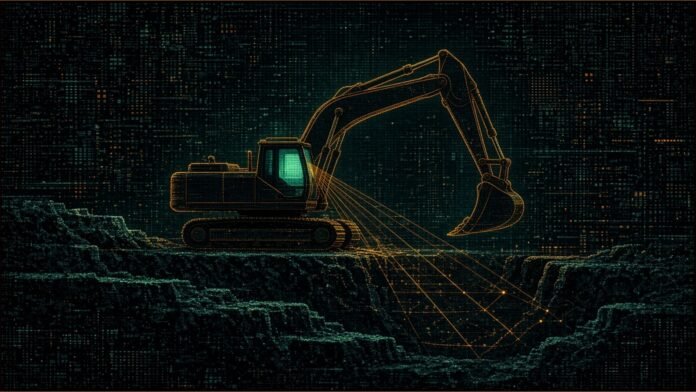
Bedrock does not build its own machines. It retrofits the excavators contractors already own with sensors, computers and software so they can dig without a driver. Emergence, which first backed the company in 2025, gave the most detail on the first job in its post about the round. In August, it says, an excavator on a water treatment site in Nevada “dug to grade and loaded dump trucks for a full shift with nobody in the cab”.
“We have proven that fully autonomous excavators can perform real work of value alongside the crews and workflows already in place on job sites,” said chief executive Boris Sofman. “The next challenge is delivering that capability to more contractors as a dependable part of how projects get built.”
The company was founded in 2024 and is led by former Waymo engineers; Emergence says much of the engineering team also came from Caterpillar. CapitalG’s post on the round names the co-founders as Sofman, Kevin Peterson, Ajay Gummalla and Tom Eliaz, and says CapitalG co-led Bedrock’s Series B earlier this year. Excavators come first because they are the hardest machine on a site, Emergence argues. Dump trucks, dozers and loaders are next on the roadmap.
New customers take Bedrock into the Midwest and South Atlantic
Haydon, an employee-owned contractor based in Tempe, Arizona, is the latest customer. It will use Bedrock’s system for fully autonomous earthwork on a remote site in Texas, and later test trench work and larger machines. “For us, the biggest win is a safer, more predictable job site,” said Katie Haydon, its chief executive and chair.
Bedrock also named Wagner Construction in Minnesota, Smith Trucking Company in Florida, B&S Site Development in Virginia, Native Excavating in Colorado, Clarkson Construction in Missouri, C.W. Matthews in Georgia and selected ArchKey Solutions projects in Arkansas. It says those contracts take its machines beyond the West and Central South for the first time.
The round’s other backers are 8VC, Georgian, Valor Equity Partners, Xora, Eclipse, Perry Creek Capital and NVIDIA, among existing investors. Bedrock has also hired Amy Jones Satrom, who has worked at Amazon, Nuro and Uber, as vice-president of operations, and Lando Juarez, formerly head of legal for Uber’s autonomous mobility and delivery business, as general counsel.
Bedrock’s pitch rests on a labour shortage. Its release says US employers will need to fill about 1.7 million skilled trades openings a year through 2035, and that 87% of construction firms report open hourly craft positions, but it does not say where those figures come from. Emergence puts the need for construction equipment operators at roughly 46,000 jobs a year through 2034.
Paid autonomous shifts are real, but the numbers behind them are thin
Bedrock has crossed the line that matters most for an autonomy company: customers are paying for work done with nobody at the controls. That puts it ahead of many robotics firms raising money on demonstrations. Both lead investors say they saw it happen, and naming eight contractors gives the claim more weight than an anonymous pilot.
What the announcements leave out is scale. Bedrock gives no count of autonomous machines or hours worked, and “more than doubled” its customer volume has no starting number. Emergence’s claim of “millions of cubic tons of dirt moved” is the only output figure, and it does not separate unattended work from the rest. A $4.1bn valuation is a bet that one excavator on one site becomes fleets on hundreds. That pattern is familiar from robotics. GXO’s repeat order for Agility’s humanoids, covered in our report on Digit’s two new US warehouses, came nearly three years after a first pilot in late 2023, and Parallel Systems is still running under regulatory test approval on rail, as our Mecka AI and Parallel Systems funding report set out.
The demand side looks stronger. The shortage of skilled site workers is one reason Altimeter’s Brad Gerstner gave for doubting SemiAnalysis’s forecast of 50GW of new data centres in 2027, and Emergence says Bedrock already digs on data-centre sites. Retrofitting machines contractors own also avoids the capital cost that slows sales of new hardware, a contrast with humanoid makers such as Figure, whose Figure 04 has only just reached design lock. TSN tracks rounds like this on its AI funding rounds hub.
The figure to watch is the fleet. Once Bedrock says how many machines are digging unattended, and for how many hours, its valuation will have something to stand on.
Sources
- Bedrock Robotics via GlobeNewswire, “Bedrock Robotics Raises $600 Million Series C to Scale Autonomous Construction Equipment Across U.S. Sites”, 26 October 2026
- CapitalG, “Doubling Down on Bedrock”, 26 October 2026
- Emergence Capital, “Built on Bedrock: Doubling Down on the Autonomy Platform for Heavy Construction”, 26 October 2026
Related stories
- Mecka AI and Parallel Systems: Paying for Robot Data and Autonomous Rail
- GXO Adds Two US Sites for Agility’s Digit Humanoids From Early 2027
- SemiAnalysis Forecasts 50GW of Data Centres in 2027; Gerstner Says 25
- Figure Says Its Figure 04 Humanoid Has Reached Design Lock
Follow @tsnmediahub on X for breaking AI news as it happens.
Follow on X