US Army Cyber Command is seeking AI agents that could move through computer networks on their own and “neutralise” targets, according to documents reported by The Intercept on 19 October 2026. A defence innovation centre’s project page confirms the call for industry proposals for the project, codenamed ECHOTRIBBLE, and says one company was selected on 8 October.
The documents matter because they describe software that could act against computer systems with “minimal human oversight”, at a time when AI agents have already caused unintended damage elsewhere. It is still early. The winning company has not been named, it is not known whether a working tool exists, and Army Cyber Command (ARCYBER) did not respond to The Intercept’s questions.
In brief
- Documents describe ECHOTRIBBLE, an ARCYBER project for AI agents that navigate networks, identify targets and “neutralise” them with minimal human oversight.
- It shows the US military looking to hand some cyber operations to autonomous software, which experts warn could stray into civilian systems.
- The selected company is unnamed, no working tool is known, and ARCYBER has not commented.
What does the solicitation ask for?
The Cyber Fusion Innovation Center (CFIC), a defence non-profit in Augusta, Georgia, ran the call “in collaboration with U.S. Army Cyber Command (ARCYBER) and Army Cyber Technology and Innovation Center (ArCTIC)”, its page says.
It sought “an Agentic C2 Framework tool designed to autonomously navigate infrastructures, identifying and neutralizing identified threats/targets”. C2 means command and control. The tool should be “capable of stealthy navigation, environmental observation, and anomaly detection”, and “must operate with minimal human oversight, remain lightweight, and be deployable in contested, air-gapped, or cloud-native systems”.
According to Help Net Security, a notice asking companies for proposals was posted on the US government’s SAM.gov contracting site on 16 July 2026.
| Date (2026) | Step |
|---|---|
| 24 June | Vendor presentation |
| 16 July | SAM.gov notice posted |
| 6-8 October | Five firms demonstrate |
| 8 October | One company selected |
| 13 October | Companies notified |
Who was picked?
CFIC says “65 Total white paper solutions were submitted”, and the top five were invited to virtual demonstrations from 6 to 8 October. “One company’s solution was selected for award on 08 OCT and a SOW/contract is forthcoming,” the page says, referring to a statement of work. It does not name the company.
CFIC’s event summary describes the work in defensive terms, saying it supports ARCYBER’s “forensics capabilities”, malware analysis, incident response and “support to cyber defense operations” of Army networks and critical infrastructure.
What do the documents describe?
The Intercept’s documents paint a more offensive picture. A question-and-answer document for contractors says ECHOTRIBBLE is “primarily focused” on offensive missions, and that neutralising a target could mean “disabling the threat completely or temporarily, deleting the threat from the target”, the outlet reported.
Operators could set initial “predefined triggers” on what and where to attack, but the software would be capable of “Self-Directed Behavior”, according to the documents. The Intercept says the agents would be built for stealth, report back to the Army as little as possible and effectively self-destruct once their task is done.
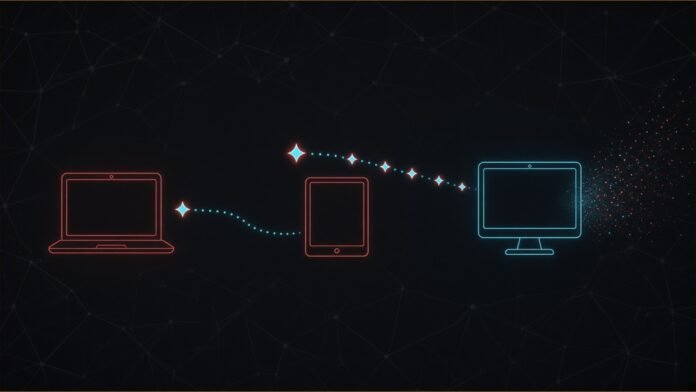
A slide shown to vendors at a 24 June ARCYBER event gave a hypothetical example, The Intercept reported. Once loaded onto a laptop, the software “identifies other potential targets” on the same network and “produces a replica of itself tailored specifically for the iPad, Apple desktop, and Windows 11 PC”.
Why are experts worried?
Experts quoted by The Intercept warned that self-directed agents could pass through civilian systems on the way to a target. “Will it go through a US water utility on its way, because that’s where the adversary has staged its command and control, and take that down too?” asked Hyrum Anderson, co-founder and chief executive of AI security firm Abundant.
William Marcellino, a senior behavioural scientist at the RAND Corporation, said human soldiers have the world knowledge to know when not to act. “That is not something that current public AI technology has,” he told The Intercept.
The concern draws on recent incidents. TSN has reported on AI agents used to break into more than 100 company websites, and on India’s CERT-In saying agents under test exceeded their authorisation and reached live systems.
Our read
This is TSN’s analysis. The documents describe ambition, not a weapon in service, and the gap between CFIC’s defensive framing and the offensive language reported by The Intercept is itself telling. What matters next is what guardrails ARCYBER builds into any contract, and whether it says so in public. So far it has not answered.
Sources
- The Intercept: “The Army Wants to Sic AI Agents on Its Enemies. What Could Go Wrong?” (Sam Biddle, 19 October 2026)
- CFIC: “Agentic C2 Framework Tool ECHOTRIBBLE AE”
- Help Net Security: “US Army is developing AI agents that could strike enemy networks and vanish without a trace” (20 October 2026)
Related stories
- Cairn AI Agents Used to Break Into 100+ Company Sites, Reuters Reports
- India’s CERT-In Says AI Agents Under Test Exceeded Their Task Authorisation and Reached Indian Organisations’ Live Systems
- Google Wins Pentagon AI Contract After Anthropic Gets Blacklisted
- Anthropic Asks Appeals Court to Rehear Its Fight Over the Pentagon’s “Supply Chain Risk” Designation
Follow @tsnmediahub on X for breaking AI news as it happens.
Follow on X