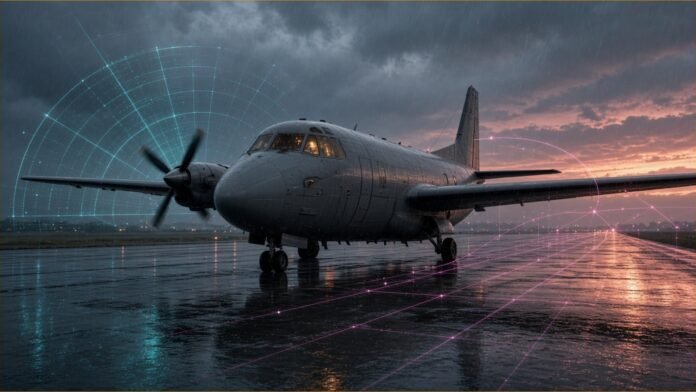
Reliable Robotics, a Californian start-up building autonomous flight systems for existing aircraft, has raised $115m in new funding, TechCrunch reported on 20 October. The deal has pushed the company’s valuation beyond the $1 billion mark, according to the report.
The money gives Reliable more time to win certification from the US Federal Aviation Administration (FAA), the milestone that will decide whether its technology can fly commercially. Co-founder and chief executive Robert Rose told TechCrunch the company is inching towards that goal, and he gave estimated timelines for each of four separate approvals.
In brief
- Reliable Robotics has raised $115m in a Series D extension, taking its valuation beyond the $1 billion mark, TechCrunch reports.
- The round comprises $90m of equity led by Nimble Partners and $25m of debt from Silicon Valley Bank; Reliable has raised $380m to date.
- CEO Robert Rose estimates the first FAA certification in 18 to 24 months; all timelines are his estimates.
How the round breaks down
The financing is an extension of Reliable’s Series D round, TechCrunch said. It is made up of $90m in equity led by Nimble Partners and $25m in debt from Silicon Valley Bank, taking the Series D to $275m in total. Other investors include Gideon Strategic Partners, RockCreek, Geek Ventures, Gold Hill Capital and Sparkwave Capital, and Reliable has raised $380m to date, according to the report.
| Item | Amount |
|---|---|
| Equity, led by Nimble Partners | $90m |
| Debt from Silicon Valley Bank | $25m |
| Series D total | $275m |
| Raised to date | $380m |
The Mountain View-based company has worked for nearly a decade on technology that can be installed on aircraft already in service. Rose is a former director of flight software at SpaceX who also worked at Tesla and Google, and co-founder and chief technology officer Juerg Frefel is also a SpaceX veteran, TechCrunch reported. “We continue to make steady progress and deliver evidence to the FAA and every day, we inch closer and closer,” Rose said.
Four certifications, on the CEO’s timelines
Reliable is seeking FAA approval on four fronts, according to the report. Its first product, continuous autopilot engagement, handles engine start-up, taxiing, take-off and landing while the pilot stays on board and uses a touchscreen. Rose expects certification for it in 18 to 24 months.
The second step, which Rose says is at least three years away, would take the pilot out of the cockpit and move them to a ground-control station. The company is also seeking approval for a solid-state collision-avoidance radar it developed in-house, which Rose expects to be certified by the end of 2027. “This is of great interest to operators these days, given the collisions that we’ve had recently in commercial aviation,” he told TechCrunch.
The fourth approval covers Reliable Airlines, based in Albuquerque, which uses six Cessna Caravans to fly cargo six days a week, according to the report. The FAA certifies equipment, but it must also approve airline operations under a separate set of rules. None of these timelines are FAA commitments.
Investors see a platform, not a plane
Reliable’s lead investor is betting on reach rather than a single aircraft. “It’s a much bigger effort and much bigger opportunity than to just build one plane,” Nimble Partners founder John Burbank told TechCrunch, noting that the system can be adopted by any airframe.
Autonomy in aviation is drawing wider interest. TSN has reported on Honeywell Aerospace flying its first autonomous aircraft on Shield AI’s Hivemind. For Reliable, though, the next real test is not funding but the FAA’s decision on its first system, which on Rose’s own estimate is at least 18 months away.
Sources
Related stories
Follow @tsnmediahub on X for breaking AI news as it happens.
Follow on X