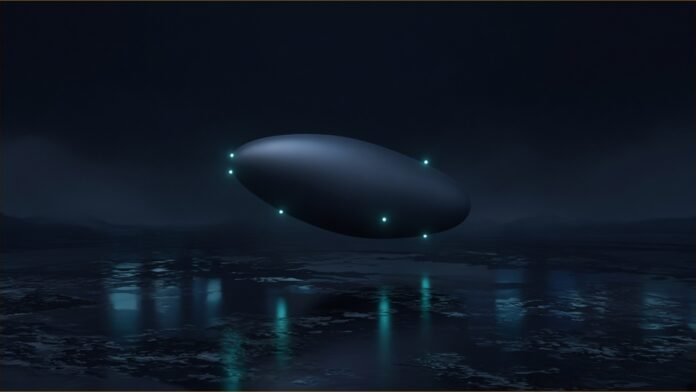
Self-driving cars in the US could carry between four and eight blue-green lamps to show when no one is expected to be watching the road, under a proposal from the National Highway Traffic Safety Administration (NHTSA). The notice of proposed rulemaking, filed for public inspection at the Federal Register on 23 October and due to be published on 26 October, would let manufacturers fit the cyan “ADS marker lamps” as optional equipment, to one federal specification.
The lamps are one of five changes to Federal Motor Vehicle Safety Standard No. 108, the rule that governs vehicle lighting. The others would drop several requirements written for a human driver, such as hand-operated turn signal and beam controls, in vehicles that have no steering wheel or pedals. It is a proposal, not a final rule. NHTSA’s pre-publication text, signed by Administrator Jonathan Morrison on 22 October, asks for comments within 30 days of publication, which would be 25 November.
In brief
- What happened: NHTSA has proposed optional cyan “ADS marker lamps”, four to eight per vehicle, to show when a car is driving itself, and would drop manual light controls in cars without a steering wheel or pedals.
- Why it matters: Any lamp fitted would have to meet one federal specification, which NHTSA tentatively says would pre-empt parts of California’s rules.
- What’s next: The proposal is due to be published on 26 October, with comments due 30 days later.
What the cyan lamp proposal specifies
The proposal defines an ADS marker lamp as “a lamp that is used to indicate when a vehicle is operating without the expectation that an occupant is monitoring the roadway”. ADS stands for automated driving system. A vehicle could carry “four to eight ADS marker lamps”, with at least one visible from each of the front, sides and rear, mounted at least 15 inches off the ground.
The lamps would be “steady burning” and cyan, “the blue-green color defined in SAE J578”. NHTSA says it chose a colour not already used for required lighting because amber, red or white “would not have clear meaning”, and that cyan was picked “in part because it is distinct from the blue hue used by law enforcement”. A front lamp could shine at up to 125 candela, the same ceiling as a parking lamp. No ADS marker lamp could be combined optically with any other lamp. The agency asks for evidence on whether the lamps should be allowed to flash to signal a vehicle’s next move.
According to The Verge’s reading of the proposal, NHTSA wants the lamps “to clearly and consistently signal to law enforcement and other road users when an automated driving system is operating the vehicle.” The Verge notes that Mercedes-Benz won state approval for turquoise lights on its Drive Pilot cars before changing course.
An optional lamp still gives Washington control of the design
NHTSA is explicit that it is “not proposing to mandate ADS marker lamps on all vehicles equipped with ADS”, saying it “lacks sufficient information to conclude that there is a safety need” for them. The optional status is narrower than it sounds. Any lamp a manufacturer does fit would have to meet the federal specification, and the proposal would “prohibit ADS marker lamp installation on vehicles without ADS functionality”.
The proposal would also override state rules. As of January 2026, the agency says, California explicitly permits ADS marker lamps built to the industry standard, SAE J3134. NHTSA’s version differs from that standard on brightness, number of lamps, optical combination and other points, and the agency “tentatively believes” the federal rule would pre-empt the relevant sections of the California Vehicle Code where the two diverge. It tentatively expects to pre-empt state colour limits only where they would block a compliant lamp, and says any future state ban would likely be pre-empted too.
The agency frames this as certainty for industry: a single specification manufacturers can “implement without risking a violation” of the existing ban on extra lights that impair required ones. For manufacturers, that means one federal specification in place of state-by-state rules; for states, it means less say over a lamp that would appear on their roads.
Dropping manual controls moves responsibility to the software
The rest of the proposal deals with cars that have no manually operated driving controls. NHTSA says such vehicles “currently are not available for consumer purchase”, although some manufacturers and ride-hailing operators already run them in several cities. Under the current standard, turn signals must cancel when the steering wheel turns and must be cancellable by hand, and beam switches must work by “a simple movement of the driver’s hand or foot”.
NHTSA would keep the requirement for turn signals and beam switching but drop those manual conditions where there is no driver, because the automated system controls the lights and, in the agency’s words, “the system cannot forget that the turn signals are active”. Turn signal and high-beam telltales would no longer be required in those cars. The hazard warning telltale would stay, and a lamp-failure telltale would have to be visible from every seat. For cars with a steering wheel, NHTSA says nothing changes.
The agency has “not quantified any potential benefits or costs”. It argues that, without the change, these vehicles “would seek exemptions from this standard” instead. If adopted, it wants the rule to take effect immediately. NHTSA is pursuing similar changes to other standards: earlier this year it proposed amending rules on gear shifting, windscreen defrosting and wiping, and tyres for vehicles without manual controls.
UK drivers back the lamps in a survey NHTSA cites
The proposal leans on an international survey of more than 4,400 drivers in the UK, Japan, the US and Germany, presented to a UN lighting working group in April 2025. NHTSA says “upwards of 80 percent” of respondents in the US and the UK agreed that self-driving vehicles should carry a marker lamp. It also cites a two-year on-road trial of cyan lamps that Mercedes-Benz ran in California from 2023 to 2025 with five vehicles. A separate UN working party on automated vehicles “does not recommend requiring additional lighting” yet, citing uncertainty and the need for more research.
The Verge names Waymo, Nuro, Zoox, GM and Mercedes as companies that could adopt the lamps. That list includes Waymo, which is preparing a service in Madrid, and Zoox, which is leasing space to scale up production. The Verge also noted that NHTSA opened an audit query last month into how Tesla certified its Cybercab, which a Tesla engineer said the company is trying to get to customers before the end of the year. Projects abroad, such as Pony.ai’s study of robotaxis in Kazakhstan, would face their own national rules. In the US, the first deadline is the comment window, which would close on 25 November, 30 days after publication.
Sources
- Federal Register, public inspection document 2026-21794, “Federal Motor Vehicle Safety Standards: Modernization of No. 108 to Accommodate ADS-Equipped Vehicles”, filed 23 October 2026, scheduled for publication 26 October 2026
- NHTSA, notice of proposed rulemaking, Docket NHTSA-2026-1519, RIN 2127-AM70, signed 22 October 2026 (pre-publication PDF)
- Office of Information and Regulatory Affairs, Unified Agenda entry, RIN 2127-AM70 — https://www.reginfo.gov/public/do/eAgendaViewRule?RIN=2127-AM70&pubId=202510
- The Verge, “Feds want robotaxis to signal ‘I’m driving’ with cyan-colored lights”, Andrew J. Hawkins, 23 October 2026
Related stories
- Tesla Targets Unsupervised FSD in Owners’ Cars for Q2 2027, Robotaxi Zones Only
- Waymo Is Coming to Spain, Starting With the Madrid Region in 2027
- Pony.ai and inDrive Sign MOU on Kazakhstan Robotaxis, Companies Say
Follow @tsnmediahub on X for breaking AI news as it happens.
Follow on X