Updated 8 November 2026: Qubic later published a recovery blog saying the network resumed on 20 October and that a reclaim portal is open until 1 May 2027. The portal itself, checked on 8 November, still says the network is halted. Analysis and related TSN links added.
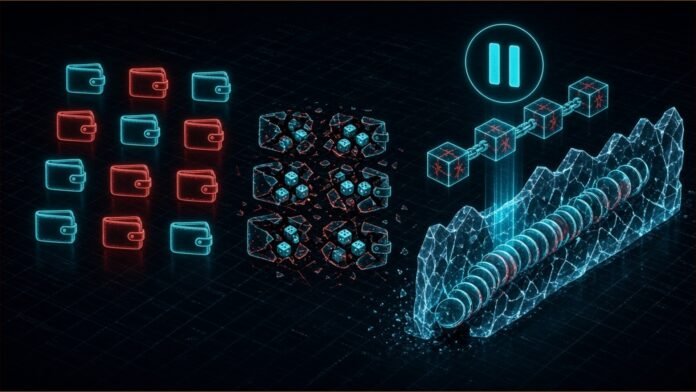
Qubic, a crypto network that markets itself for AI computing, stopped processing transactions after an attacker emptied 1,404 user wallets. The attacker exploited weak seeds that were “generated with insufficient randomness”, the project said in an official thread on X on 18 October 2026. Seeds created on iPhones, iPads and in Safari on Macs are among those affected.
In a blog post dated 2 November 2026, Qubic said its Computor quorum later approved a recovery plan and that the network resumed on 20 October. It also said an official reclaim portal is open until 1 May 2027 and that some verified owners have already had funds returned. The reclaim portal, checked by TSN on 8 November 2026, is accepting claims until that date but still carries introductory text saying “the network is halted and the funds are frozen”. TSN has not independently checked tick times on Qubic’s public explorer.
What Qubic said happened
“Between 23:42 UTC on 17 October and 01:26 UTC on 18 October, an attacker drained 1,404 Qubic wallets, totalling around 2.94 trillion QU,” Qubic posted on 18 October at 12:29 UTC (13:29 UK time). In UK time, the attack ran from 00:42 to 02:26 on Sunday morning, a window of 1 hour and 44 minutes by TSN’s count.
“Some wallet seeds were generated with insufficient randomness, making them weaker than they should be,” Qubic said. “The attacker exploited this to access the affected wallets.” A seed is the secret phrase or code that controls a crypto wallet. If it is not random enough, an attacker can reproduce it and sign ordinary transfers. The project stressed that its blockchain itself was not broken. “The issue was in seed generation, not in the Qubic protocol itself,” it said. The later blog repeats that every stolen transfer was an ordinary signed transaction and that consensus was not compromised.
Which wallets Qubic says were affected
According to Qubic, and restated in the November blog, seeds are affected if they were created:
- on an iPhone or iPad, in any browser, before 18 October 2026
- on a Mac using Safari, before 18 October 2026
- in the Qubic iOS app, before July 2025
The blog adds that Android app wallets were checked and were not flagged. The project has not published a complete public list of every weak seed, and it has not said that every seed in the affected device groups was guessable.
The halt, and where the funds went
The network is run by operators called Computors. “Computors coordinated a protective halt of the network at tick 85,371,949 after the wallet drain,” Qubic said on 18 October. At that point no transactions were processing, so the drained funds could not be moved or sold.
Most of the money did not get far. “87.1% of the drained funds never left the Qubic network and remain frozen in place,” Qubic said. “The remaining 12.9% was sent to MEXC, whose team froze the receiving account within about an hour.” By TSN’s arithmetic, that is roughly 2.56 trillion QU still on the network and about 379 billion QU sent to MEXC. The November blog uses the same split and says about 379.04 billion QU went to a single MEXC deposit address.
The project added on 18 October that “Exchanges have been notified and have suspended QUBIC deposits and withdrawals.” MEXC’s announcement said: “As requested by the Qubic (QUBIC) project team, MEXC has suspended QUBIC deposits and withdrawals.” Crypto Briefing reported that Bitget had also suspended QUBIC deposits and withdrawals. TSN has not seen a Bitget notice.
How much was taken
The project has not given its own dollar figure. It has kept the amount in QU: about 2.94 trillion. The Defiant put the loss at $1.3 million, and Crypto Briefing described the 2.94 trillion QU as “worth approximately $1.3 million at the time”. Those are the outlets’ estimates. The November blog refers to “around $1.4 million in press estimates” without naming a source for that slightly higher figure.
Recovery, claims and what Qubic says holders should do
On 18 October it said “Seed generation has been corrected in version 4.26.4” and that “No new weak seeds can be created.” It also said any resolution was “a decision for the Computor quorum, under the rules of the network,” and that a full technical report would follow once recovery was settled.
The 2 November blog says that vote has now happened. According to Qubic, the quorum approved a recovery plan two days after the attack, the network resumed on 20 October, and drained QU still on the network was moved into a recovery escrow identity. The blog says MEXC later returned the frozen funds to their original, frozen address on Qubic, and that those funds are part of the same claims process. It also said more than 230 claims had been received by the week of 26 October and that the first returns had gone out to cases where ownership was “beyond doubt”.
The official reclaim site is weak-seed-reclaim.qubic.org, and it is open until 1 May 2027. The portal says a claim needs the affected identity, a new destination identity created in an updated wallet (version 4.26.4 or later), a signed message, and proof of ownership. It explains why a signature alone is not enough: because the seeds were weak, an attacker who reproduced a seed can produce the same valid signature as the owner. Evidence the attacker is less likely to have — such as an exchange withdrawal receipt to the affected address — is what the portal says will decide a claim.
On one operational point the two official pages are not aligned. The blog says MEXC has already returned the frozen funds to Qubic. The portal, checked on 8 November, still describes QU drained to MEXC as “returned via the exchange; separate and slower, and depends on law-enforcement cooperation.” TSN cannot reconcile those two statements from the public pages alone.
The project still warns users not to reply to recovery messages. “Nobody from Qubic will ever message you first, ask for your seed, or offer recovery services for a fee,” it said in October, and the blog repeats the same warning. Anyone who created a web wallet before version 4.26.4 is told by the project to treat that seed as insecure even if it was never drained, create a new wallet, and move any remaining funds. It also still asks victims to file a report with police or cybercrime authorities, including the wallet ID, the amount lost and the transaction link from the Qubic explorer.
A halt can freeze stolen QU; it cannot make a weak seed safe to reuse
The important distinction in Qubic’s own account is between the protocol and the software that created some wallets. If the project’s description is right, the attacker did not break consensus or forge a transaction. They reproduced seeds that had been generated with too little randomness, then signed ordinary transfers. That is closer to a user being given a guessable password than to a chain being rewritten. It is also why a halt could still help: once Computors stopped the network at a stated tick, most of the drained QU could not be sold or bridged onward. Freezing 87.1% of the stolen balance on-network, and getting an exchange to freeze the rest within about an hour, is a containment story, not proof that the wallets were well designed.
The later recovery vote raises a different question, which Qubic itself flagged. Changing balances after a halt is a governance choice. It can return funds to victims, and it also creates a precedent that a quorum can rewrite who holds what. Qubic says the change was narrow — moving drained and at-risk balances into escrow, freezing affected identities, and cancelling open orders on those identities — and that any future case would need its own vote. Those are the project’s claims about the scope of the decision. They are not an independent audit of the code that was applied.
Holders should read the official pages with that gap in mind. The blog presents a completed restart and the beginning of repayments. The reclaim portal is open, which supports the idea that recovery is under way, but its own introduction still says the network is halted, and it still treats the MEXC slice as a slower, exchange-led path. Until Qubic publishes the promised technical report, or the two pages say the same thing, the safest actions are the practical ones: do not reuse an affected seed, file a claim only through the official portal, keep evidence of ownership, and ignore anyone who asks for a seed or a recovery fee. Similar user-side wallet failures have appeared elsewhere on TSN, including Keplr’s warning that some social-login wallet keys were breached, a fake SKR claim app that asked for seed phrases, and a Fearless Wallet extension leak of users’ private keys. In each case the chain was not the only thing that had to hold; the software that created or stored the secret did too.
Sources
- Qubic on X: security incident update thread, 18 October 2026
- Qubic: Qubic Wallet Drain: How the Quorum Stopped a Crypto Hacker’s Plan Within Hours, 2 November 2026
- Qubic fund reclaim portal for the weak-seed incident
- MEXC: Suspension of QUBIC Deposits and Withdrawals
- The Defiant: Qubic Halts Network After $1.3 Million Wallet Drain
- Crypto Briefing: Qubic halts mainnet after wallet drain empties 1,404 accounts
Get TSN’s biggest tech stories, explained.
News and insights across AI, tech, crypto and cybersecurity. Every source linked. Unsubscribe anytime.
Get the newsletterRelated stories
- Keplr Says Some Social-Login Wallet Keys Were Breached. Another wallet-software failure in which the chain itself was not the broken part; the closest follow-on from Qubic’s weak-seed incident.
- Fake SKR Claim App Asking for Seed Phrases Reached Solana dApp Store
- Fearless Wallet Extension Leaked Users’ Private Keys, Polkadot Says
- Hacken Says Crypto Hacks Cost $1.18 Billion in Q3 2026, Mostly Through Suppliers, Developer Tools and Unpatched Fixes
Follow @tsnmediahub on X for breaking AI news as it happens.
Follow on X