
An OpenAI engineer has been arrested and charged after a hidden audio recording device was found in an executive conference room at one of the company’s San Francisco buildings, the US Justice Department said on 13 October 2026 [1]. The case rests on a criminal complaint. The charges are allegations, and he is presumed innocent unless and until proven guilty in court. In a detention filing on 18 October, prosecutors also alleged Saudi links, which his lawyer disputes, on 19 October a judge ordered him held without bail, and on 27 October a federal grand jury indicted him (see the updates below).
Update, 31 October 2026: grand jury indicts the former OpenAI engineer
Update, 31 October 2026: A federal grand jury indicted Alfozan on 27 October on a felony charge of intercepting oral communications, the San Francisco Chronicle reported, citing a court filing. According to the Chronicle, the indictment, filed in the US District Court for the Northern District of California, alleges that from about 28 September to 5 October he intentionally used electronic devices to “intercept one or more oral communications” related to OpenAI’s business operations. It includes a forfeiture allegation covering the recording devices and associated hardware. The maximum penalty is unchanged at five years in prison and a $250,000 fine, and he remained in custody without bail. The indictment replaces the original criminal complaint as the charging document; it is still an accusation, and he is presumed innocent. TSN has not seen the indictment itself.
Update, 20 October 2026: judge orders Alfozan held without bail
A federal judge in San Francisco has ordered Abdulrahman Alfozan held without bail while he awaits trial, after finding he was a flight risk. At a hearing on 19 October, US Magistrate Judge Alex G. Tse rejected the defence’s request for release, saying “there is a risk of non-appearance that is significant”, the BBC reported.
His lawyers had argued that he was working towards US citizenship and was willing to put up $1 million in assets to secure bail, according to AFP. Prosecutors pointed to his alleged Saudi ties, including, Wired reported, an offer from the Saudi consulate to work with a bail bonds firm to help fund his release. Tse questioned how a government-backed bond could keep him in the country. “It seems like a blank check,” he said, according to Wired. “I’m more interested in people from his family wanting to put up assets.” AFP quoted him as saying: “Once he leaves, there’s no getting him back, the case goes away, and that is why this is a bigger case.”
The defence disputes the government’s account of his family’s departure. Nas Yasin, another of his lawyers, said his wife’s flight was booked by her sister’s husband in a personal capacity, Wired reported; Wired said the relative works for the Saudi navy. William Pernik told reporters he was disappointed with the ruling and would keep fighting it. Alfozan, who did not speak during the hour-long hearing, has not been charged with spying. He faces a single count carrying up to five years in prison and is presumed innocent. His next court date is 6 November.
Update, 19 Oct: prosecutors allege Saudi royal contact and Saudi-paid flights for his family
Federal prosecutors now allege that Alfozan was in frequent touch with a member of the Saudi royal family and that a Saudi military official paid for his wife and young son to leave the US after his arrest. The claims are in a detention memo filed on 18 October, first reported by Reuters and the BBC. Prosecutors are using them to argue he is a flight risk and should stay in custody. They are allegations, not findings, and he is presumed innocent.
According to the memo, Alfozan exchanged WhatsApp messages throughout 2025 and 2026 with a royal family member who wanted him to join a Saudi artificial intelligence initiative. In May 2026, that person allegedly wrote: “Saudi needs you more then [sic] the US!” Alfozan replied “100”, which prosecutors say showed he agreed. The memo says he told the person he would not leave OpenAI until his stock vested.
The travel allegations are central to the government’s case for detention. Prosecutors say he was due to fly one way to Riyadh with his family on 12 October, three days after his arrest, and was “mere days away” from leaving. His wife and son were first booked on a Saudi government-paid flight to Jeddah. When that was cancelled, a member of the Saudi military paid for business-class tickets to Doha, and they left on 10 October. The memo says this amounts to “what appears to be considerable support from a foreign government”.
Prosecutors also say that OpenAI executives met government officials in the same conference room in the days around when the device was installed. They wrote that he “went to significant lengths to create customized, encrypted recording devices to secretly record highly sensitive meetings involving senior OpenAI personnel and executives, high-level business counterparts, and government officials, all while communicating with individuals of significance in Saudi Arabia and pursuing opportunities in — and making plans to travel to — Saudi Arabia.” The memo does not allege that the Saudi government directed the recording. It says the investigation is continuing and could lead to more serious charges.
The defence disputes that he would flee. Reuters reported that his lawyer, William Pernik, has asked for his release with location monitoring and surrender of his passport. Pernik said Alfozan has spent the last 15 years in the US and has applied for citizenship. He said the Saudi trip was booked before the investigation began and was for “family and immigration reasons”. Neither Pernik nor the Saudi government’s media office immediately responded to Reuters’ requests for comment. A detention hearing was scheduled for 19 October in San Francisco.
The Justice Department said Abdulrahman Alfozan, 35, a national of Saudi Arabia, was charged with “using or endeavoring to use an electronic, mechanical, or other device to intercept oral communications” [1]. He was arrested on 9 October and made his first appearance in federal court on 13 October.
What the complaint alleges
According to the Justice Department’s account of the complaint, Alfozan had worked at OpenAI as an engineer since July 2025 [1].
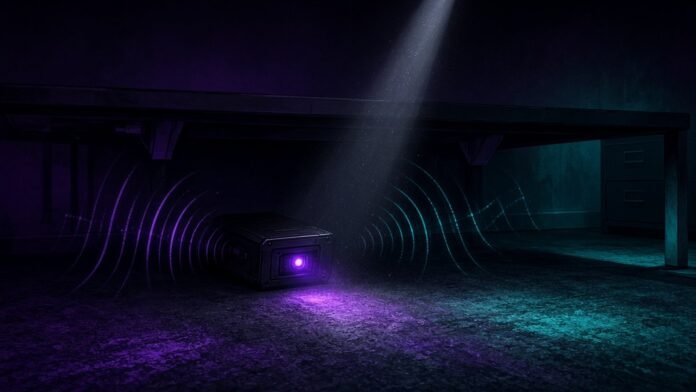
- The first device. On or about 30 September, OpenAI staff found a hidden audio recording device plugged into a USB port on the back of a television in an executive conference room. The department said OpenAI determined the device, which had been “concealed in toilet paper”, was installed on or about 28 September, and that its contents were encrypted.
- Camera footage. CCTV allegedly showed Alfozan near the room on several dates before the device was found, although, the complaint says, he “had no authority to access” the room or join meetings there. Those meetings often covered highly confidential technical, commercial and strategic information, according to the complaint.
- Questions about meeting rooms. Before 28 September, he allegedly used a productivity tool to ask about OpenAI’s building addresses, meeting rooms and calendars, “leadership and exec” locations and external partner meetings.
- Chatbot prompts. A chatbot account linked to his spouse, which the department said shared several identifiers with his own account, allegedly asked between 24 and 30 September about “build[ing] a continuous audio recorder” and “encrypt[ing] the SD card”, among other things. The same account also allegedly asked about the first device’s custom header and MAC address on 27 and 28 September.
- Return to the room. On 5 October, the complaint alleges, he went into the conference room and appeared to look behind the television.
- A second device. Also on or about 5 October, he allegedly left a bag unattended in another room. OpenAI security staff opened it and found, among other things, his wallet and ID and a second recording device similar to the first.
What officials said
FBI Director Kash Patel said: “According to the complaint unsealed today, Abdulrahman Alfozan allegedly concealed a covert recording device inside his employer’s executive conference room to secretly capture sensitive communications about the company’s super intelligence technology” [1].
Director of National Intelligence Jay Clayton said the case “underscores why winning the global super intelligence race is a national security prerogative” [1].
Craig H. Missakian, the US Attorney for the Northern District of California, said the arrest “highlights our relentless efforts in partnership with the FBI to identify and prosecute those who seek to steal our technology, as alleged in the complaint” [1].
What OpenAI said
In a post on X, OpenAI said it “discovered a sophisticated recording device that was hidden inside one of our offices”, used its models “to understand the device and where it had come from”, identified “that a specific employee had planted it a few days earlier”, and referred the matter to the FBI [2].
In the same post, as quoted by Reuters, OpenAI said: “At this time, we have no indications of this individual inappropriately accessing or exfiltrating model weights, source code, or customer data. The employee was terminated” [3].
What happens next
If convicted, Alfozan faces a maximum penalty of five years in prison and a $250,000 fine, followed by three years of supervised release, the department said [1]. The FBI is investigating. Assistant US Attorney Nicolas Parker is prosecuting, with help from the National Security Division’s Counterintelligence and Export Control Section. At a hearing on 19 October, a federal judge ordered him held without bail pending trial; his next court date is 6 November.
The Justice Department’s 13 October release did not say why the device was allegedly installed. In their 18 October detention memo, prosecutors wrote that whether he wanted to record meetings “to enrich himself by enhancing his own business prospects, or to provide aid a foreign government, or both,” his conduct was criminal. They also said the investigation is ongoing and “may result in additional serious charges.” No one else has been charged.
The OpenAI engineer case shows AI lab security is physical as well as digital
Much of the security debate around AI labs is about code: stolen model weights, leaked source code and hacked accounts. This case, as alleged, is about something much simpler, a small recording device hidden behind a television in a room where executives met government officials and business partners. OpenAI says it found no sign that he accessed or took model weights, source code or customer data [3], so the alleged target was conversations rather than systems. It also fits a wider pattern of insider risk that US prosecutors are now pursuing, from the North Korean IT worker scheme run through US “laptop farms” to the guilty plea over Nvidia servers diverted to China. Microsoft’s chief executive has even argued that AI models themselves should be treated like insider risks. The officials quoted in the Justice Department’s release framed the case as part of a race for “super intelligence”, but the single charge is a wiretap offence, and he has not been charged with spying. Nothing has been proven in court, and he is presumed innocent.
Sources
- US Department of Justice, Office of Public Affairs, “Saudi National Arrested for Installing Surreptitious Audio Recording Device at OpenAI”, 13 October 2026. https://www.justice.gov/opa/pr/saudi-national-arrested-installing-surreptitious-audio-recording-device-openai
- OpenAI Newsroom (@OpenAINewsroom) on X, 13 October 2026. https://x.com/OpenAINewsroom/status/2110095403198849132
- Reuters (Jaspreet Singh), “OpenAI employee arrested over hidden listening device, company says”, 13 October 2026, as published by NBC News. https://www.nbcnews.com/tech/tech-news/openai-employee-arrested-hidden-listening-device-company-says-rcna603262
- US Attorney’s Office, Northern District of California: Memorandum in support of United States’ motion for detention, US v. Alfozan, 3:26-mj-71329, Dkt. 12, filed 18 October 2026 (via CourtListener). https://storage.courtlistener.com/recap/gov.uscourts.cand.480829/gov.uscourts.cand.480829.12.0_1.pdf
- Reuters, as published by Al Jazeera: Ex-OpenAI employee accused of planting device has Saudi backing: Prosecutor, 19 October 2026. https://www.aljazeera.com/economy/2026/10/19/ex-openai-employee-accused-of-planting-device-has-saudi-backing-prosecutor
- BBC News (Laura Cress): Ex-OpenAI worker accused of planting device had Saudi support says court filing, 19 October 2026. https://www.bbc.com/news/articles/c6gel2dlyxvyo
- AFP via Al-Monitor: US judge orders Saudi engineer held in OpenAI case, 19 October 2026
- Wired: OpenAI Engineer Accused of Spying on Executives Ordered to Remain in Custody, 19 October 2026
Get TSN’s biggest tech stories, explained.
News and insights across AI, tech, crypto and cybersecurity. Every source linked. Unsubscribe anytime.
Get the newsletterRelated stories
- US Charges 14 People Over Alleged North Korean IT Worker Scheme and Raids Texas “Laptop Farms”
- Microsoft CEO Satya Nadella Says AI Models Should Be Treated Like Insider Risks
- Super Micro-Linked Contractor Willy Sun Pleads Guilty in the Nvidia-Server China Diversion Case, Reuters and Bloomberg Report
- OpenAI Says It Broke Up Two “False Front” Influence Operations, One Its Most Far-Reaching Yet
Follow @tsnmediahub on X for breaking AI news as it happens.
Follow on X


