Perplexity said on 15 October 2026 that it is open-sourcing Perplexity SPACE (Sandboxed Platform for Agentic Code Execution), the in-house sandbox that has powered its Computer product since July, when the company says it replaced a commercial sandbox provider. The code is on GitHub under the Apache License 2.0, and SPACE documentation describes an HTTP API that runs agent and user code inside isolated Firecracker microVMs.
How Perplexity SPACE isolates agent code
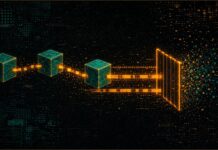
Perplexity’s blog frames SPACE as infrastructure for agent governance: isolation, state recovery, and credential and network controls around a separate workspace for agent-generated code and files. Each sandbox runs inside a small virtual machine with its own operating system; a control plane creates, pauses, resumes or removes workspaces. Credentials and network access are managed outside the sandbox so agents can reach authorised services without storing those credentials in the working environment.
Semafor reported the same day that Perplexity has lined up cloud partners — CoreWeave, Akamai and Crusoe — to offer SPACE to customers. Perplexity’s own blog elaborates that Akamai has tested and launched SPACE on its cloud platform, Crusoe is adding it to Managed AI Services, and CoreWeave has published setup guidance for evaluation on CKS.
Escape tests are Perplexity’s claim
In an interview with Semafor, Perplexity said it tested SPACE by giving nine frontier models instructions to try to break out: in 118 attempts, none succeeded, while the company said the same models could break out of other sandboxes that were not open-sourced. Those escape-test results are Perplexity’s own claim, not an independent audit.
Zibi Braniecki of Perplexity told Semafor that many companies “hit a wall” building secure AI agents and that Perplexity has “a solution,” comparing the open-source move to the industry collaboration that hardened web browsers.
Production performance claims
Perplexity’s blog says SPACE has powered all Computer sessions since July and has handled “millions of sandbox creations per day.” In a comparison on the same production traffic, the company says sandbox creation was three to five times faster than with its previous commercial provider. That speed figure is also Perplexity’s claim.
The same post says SPACE supports isolated code execution, pause and resume, recovery and session branching inside Computer — the kinds of controls needed when an agent cleans a spreadsheet, waits for human review, or branches an alternate workspace.
Open-sourcing the sandbox turns agent isolation into shared infrastructure
As agents gain tools that write files, call APIs and hold session state, sandboxes have moved from developer nicety to a core control plane. The safety of an agent that can run code depends less on what the model intends than on what the machine around it allows. Perplexity SPACE puts that boundary at the virtual-machine level, with credentials and network access handled outside the workspace, so a misbehaving or manipulated agent should find little to steal and few places to go.
Open-sourcing a production system that Perplexity says already runs at Computer scale gives other builders something inspectable, and gives security researchers a concrete target. That is how browsers were hardened, and it is the comparison Perplexity itself makes. It also lets outsiders test the 118-attempt escape result rather than take it on trust. Partner distribution through CoreWeave, Akamai and Crusoe matters as much as the GitHub repo: most enterprises will consume a hosted sandbox, not operate Firecracker fleets themselves.
SPACE joins a crowded layer. Microsoft and AWS have their own execution containers and Strands Box, and TSN has also covered Perplexity’s open Decider model and OpenAI’s Decisions API; SPACE sits one layer down, around code execution rather than structured answers.
What’s still unknown
- Independent third-party escape-test results against the open-sourced build
- Default network and credential policies in the public release versus Computer’s production configuration
- Pricing for partner-hosted SPACE offerings
What to watch
Watch the GitHub repository and SPACE docs for release tags and hardening notes, and watch whether CoreWeave/Akamai/Crusoe publish generally available SKUs rather than evaluation guides.
On 27 October Akamai launched its own Agent Sandbox, which isolates code written by AI agents with WebAssembly rather than microVMs, and said developers can choose among isolation approaches, microVMs included.
Sources
- Perplexity, “Open-sourcing SPACE, the sandbox platform behind Computer”, 15 October 2026
- GitHub, perplexityai/SPACE (Apache License 2.0)
- Perplexity, SPACE Guide documentation
- Semafor, Reed Albergotti, “Perplexity to give away its AI security software”, 15 October 2026
Related stories
- OpenAI’s Decisions API and Perplexity’s Open Decider: AI That Answers With a Probability, Not an Essay
- ServiceNow Announces AI Passport to Limit What AI Agents and MCP Servers May Do at Runtime
- AI Agent Security: Langflow’s Critical Flaw, Copilot’s Encrypted-Instruction Finding and the New Guardrail Stack
- Fences for AI Agents: Microsoft’s Execution Containers and AWS’s Strands Box
- Akamai Launches 12-Model Inference Service and an AI Agent Sandbox
Follow @tsnmediahub on X for breaking AI news as it happens.
Follow on X